

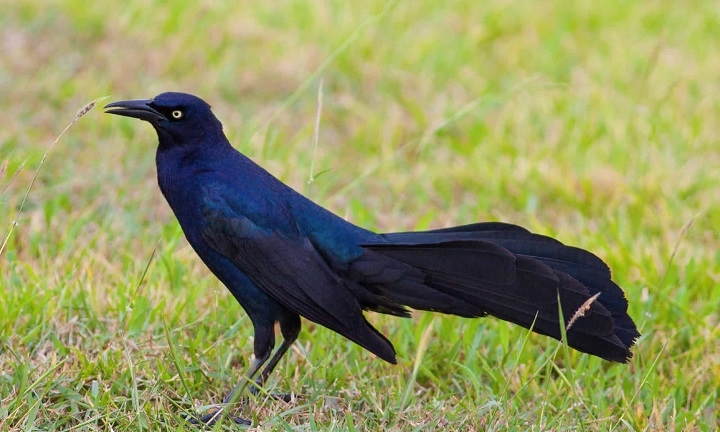
Not all birds are brightly colored. In fact, some of the most captivating and mysterious birds in the avian world are entirely or predominantly black. From crows and ravens to blackbirds and grackles, these birds have inspired awe, folklore, fear, and fascination for centuries.
Why are some birds black? Black plumage can offer practical benefits like better heat absorption, camouflage in dark environments, or sexual selection. But beyond science, black birds evoke symbolism — power, transformation, intelligence, and even omens. This article dives deep into the world of birds that are black, exploring species, characteristics, habitats, and why these shadowy fliers stand out.
Common Black Birds You Might See
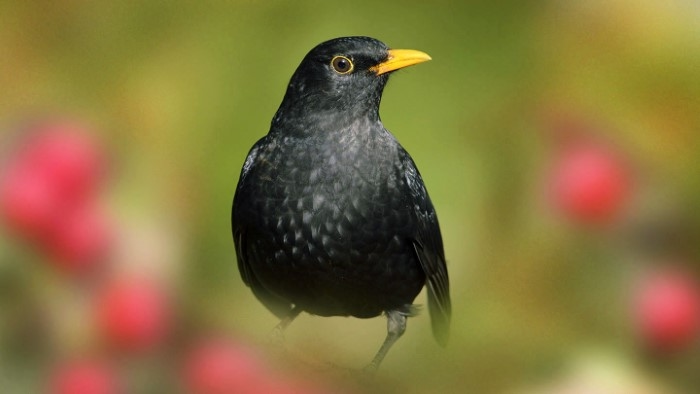
Let’s explore some of the most common birds that wear black feathers with grace and pride. These birds are found across various continents and environments.
American Crow (Corvus brachyrhynchos)
Crows are among the most intelligent birds in the world. They are social, adaptable, and capable of problem-solving. Their all-black plumage, including black beak and legs, gives them a sleek appearance.
They’re often seen in urban areas, forests, and fields, foraging in groups. Crows are known for their strong family bonds and loud cawing calls.
Common Raven (Corvus corax)
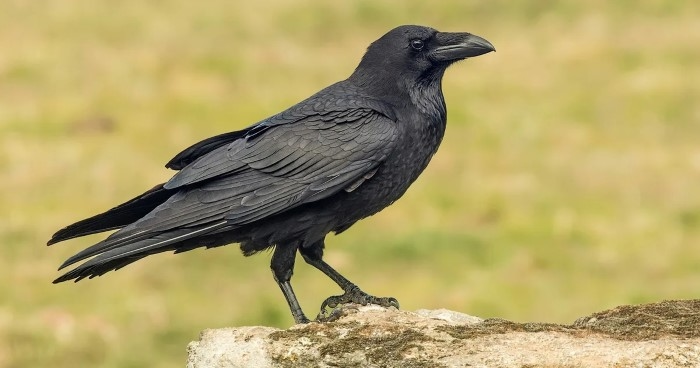
Larger than crows, ravens are striking birds with wedge-shaped tails and shaggy throat feathers. They are master mimics, known to imitate sounds like car alarms and human speech.
Ravens often mate for life and can live over 10 years in the wild. These birds appear in many cultural stories, often symbolizing prophecy or mystery.
European Starling (Sturnus vulgaris)
At first glance, starlings appear entirely black, but under sunlight, their feathers shine with an iridescent mix of purples and greens. Originally from Europe, they are now found across North America.
Starlings are fast flyers and often move in large synchronized groups called murmurations, creating swirling patterns in the sky.
Red-winged Blackbird (Agelaius phoeniceus)
While males are mostly black, their bright red and yellow shoulder patches make them easy to identify. These birds are common in North American wetlands and grasslands.
They are highly territorial and often perch visibly, singing to protect their nesting area.
Brewer’s Blackbird (Euphagus cyanocephalus)
These birds are medium-sized with glossy black feathers in males and brownish-gray plumage in females. Males have a purplish sheen on the head and a greenish body when seen in bright light.
They’re adaptable and thrive in both urban and rural areas.
Exotic and Lesser-Known Black Birds
While many black birds are familiar sights in backyards, others are less common and often found in specific regions or habitats.
Black Drongo (Dicrurus macrocercus)
Native to Asia, the black drongo is a small but aggressive bird that fearlessly drives away larger predators. Its forked tail and jet-black body make it easy to identify.
Drongos are excellent insect hunters and often mimic the alarm calls of other birds to scare them away and steal food.
Black Vulture (Coragyps atratus)
These scavengers are found in the southeastern United States, Central America, and South America. Their black feathers and bare, grayish-black heads help keep them clean while feeding on carrion.
Black vultures rely on eyesight rather than smell and often follow turkey vultures to food sources.
Black Swan (Cygnus atratus)
Native to Australia, black swans are elegant water birds with red bills and striking black plumage. Unlike the more common white swan, the black swan has long been associated with rarity and unpredictability.
They form lifelong pair bonds and are known for their graceful swimming and deep honking calls.
Melodious Blackbird (Dives dives)
Found in Mexico and Central America, this bird lives up to its name with its sweet song. It has glossy black feathers and can often be seen in open woodlands and farmlands.
Though called a blackbird, it is not closely related to the North American species.
Why Are Some Birds Black?
There are both evolutionary and environmental reasons why black coloration is advantageous.
Heat Absorption
In colder climates, black feathers absorb and retain more heat, which can help birds maintain body temperature. This is particularly useful for high-altitude or early-morning activity.
Camouflage
Black feathers help birds blend into shadows, forests, or at night. Owls, for instance, often have darker feathers to stay hidden during roosting.
Mating and Display
In some species, black plumage is associated with dominance and attractiveness. The iridescent sheen on black feathers, like those of starlings and grackles, is often used in mating displays.
Feather Strength
Melanin, the pigment that makes feathers black, also makes them more durable. Birds that fly frequently or live in abrasive environments may benefit from stronger, melanized feathers.
Symbolism of Black Birds in Culture
Throughout history, black birds have been rich in symbolism, often associated with dual meanings — wisdom and death, insight and trickery, good and evil.
In Mythology and Religion
- Ravens in Norse mythology were messengers of Odin and symbols of memory and thought.
- Crows in Hinduism are believed to represent ancestors.
- Blackbirds in Celtic traditions were linked to portals between worlds.
In Literature
From Edgar Allan Poe’s The Raven to contemporary fantasy novels, black birds often play roles that explore grief, intelligence, and the supernatural.
In Superstition
In some cultures, seeing a black bird is considered a bad omen, while in others, it’s a sign of protection or insight. Their meanings vary based on species, behavior, and the setting.
Observing Black Birds in the Wild
If you’re a birdwatcher or just curious about your local wildlife, black birds are a rewarding group to study. Their adaptability means they’re often easy to observe, but their intelligence and behavior make every encounter interesting.
Tips for Spotting Black Birds
- Visit early mornings or late afternoons — when birds are most active.
- Bring binoculars to notice iridescent plumage that isn’t visible to the naked eye.
- Observe behaviors — some species like grackles strut, while crows work in teams to solve problems.
- Note vocalizations — black birds often have unique and complex calls.
Conservation and Protection
While many black bird species are thriving, some are under threat due to habitat loss, pollution, and climate change. Understanding and protecting their habitats is essential.
For example:
- Black stilts in New Zealand are among the rarest wading birds in the world.
- The Hawaiian crow (ʻAlalā) has been extinct in the wild and is being reintroduced through breeding programs.
Supporting local and global conservation efforts helps maintain healthy ecosystems where these beautiful birds can thrive.
FAQs
What types of birds are completely black?
Crows, ravens, blackbirds, drongos, and black vultures are examples of birds with fully black plumage.
Are black birds rare?
Not necessarily. Many black birds, like crows or grackles, are quite common. However, some rare species like the black stilt are endangered.
Why do some black birds have iridescent feathers?
Iridescence is caused by the structure of feathers reflecting light. It’s often used for attracting mates or establishing dominance.
Are black birds considered bad luck?
In some cultures, yes. But in others, they symbolize wisdom, transformation, or guidance.
Do black birds migrate?
Some species, like the red-winged blackbird, migrate seasonally. Others, like ravens, tend to stay in their territories year-round.
