

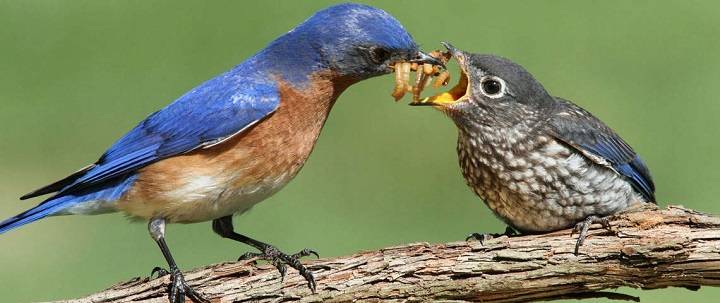
The bond between parent birds and their young is a testament to the wonders of nature and the instinctual drive to nurture and protect offspring. One of the most fascinating aspects of avian parenting is the feeding behavior, where parents tirelessly provide food to their hungry chicks, ensuring their growth and survival. In this blog post, we embark on a journey to explore the intricate strategies and fascinating techniques that birds employ to feed their young, shedding light on the remarkable dynamics of avian family life.
Avian Parenting: A Labor of Love

Nesting and Incubation:
- The journey of avian parenting begins with the construction of a nest, where parent birds create a safe and secure environment to incubate their eggs. During the incubation period, one or both parents take turns sitting on the nest to keep the eggs warm and protected until they hatch.
Hatching and Nestling Stage:
- Upon hatching, the delicate task of feeding and caring for the newly hatched chicks begins. Parent birds must provide their young with a steady supply of food to support their rapid growth and development during the nestling stage.
Feeding Techniques and Strategies
Regurgitation and Direct Feeding:
- Many bird species use regurgitation as a primary method of feeding their young, where parents regurgitate partially digested food from their crops and directly feed it to their chicks. This intimate form of feeding allows parent birds to transfer vital nutrients and energy to their offspring.
Beak-to-Beak Feeding:
- In species where regurgitation is not feasible, such as some songbirds and raptors, parent birds may engage in beak-to-beak feeding, where they transfer food directly from their beaks to the hungry mouths of their chicks.
Progressive Provisioning:
- Some bird species employ a feeding strategy known as progressive provisioning, where parents deliver food to their nestlings in small, frequent intervals. This ensures that each chick receives an equal share of food and minimizes competition among siblings.
Dietary Preferences and Adaptations

Dietary Diversity:
- The dietary preferences of parent birds vary depending on their species and habitat. While some birds feed their young a diet of insects, worms, and other protein-rich foods, others may rely on seeds, fruits, or even fish to meet the nutritional needs of their offspring.
Specialized Adaptations:
- Certain bird species have evolved specialized adaptations to facilitate feeding their young. For example, seabirds such as albatrosses and petrels have long, slender bills that allow them to capture and carry fish back to their chicks in distant nesting colonies.
Challenges and Survival Strategies
Predation and Competition:
- Parent birds face numerous challenges when feeding their young, including predation, competition for food, and adverse weather conditions. To mitigate these risks, they often choose nesting sites with ample food resources and employ vigilance and stealth to avoid detection by predators.
Brood Parasitism:
- In some cases, parent birds may fall victim to brood parasitism, where a parasitic bird lays its eggs in the nest of another species, shifting the burden of feeding and caring for the impostor’s young onto unwitting foster parents.
How Birds Feed Their Young
Parental Sacrifice:
- The dedication and sacrifice of parent birds know no bounds, as they tirelessly devote themselves to the care and well-being of their young. From long hours of foraging to defending the nest against predators, parent birds go to great lengths to ensure the survival of their offspring.
Fledging and Independence:
- As nestlings grow and develop, they gradually become more independent and self-sufficient, eventually reaching the fledging stage where they leave the nest and begin to explore their surroundings. Parent birds continue to provide guidance and support as their young learn to fend for themselves in the wild.
Related Post:
Exploring the Enigmatic Ancona Duck: A Quirky, Beautiful, and Versatile Breed
Exploring the Fascinating World of Male, Female, and Male Muscovy Ducks
Unveiling the Spectrum of Colored Duck Eggs: Nature’s Palette of Surprises
The feeding behavior of parent birds is a remarkable testament to the power of instinct, adaptation, and parental care in the animal kingdom. From regurgitating food to engaging in intricate feeding rituals, birds employ a diverse array of strategies to nourish and nurture their young. By gaining insights into the feeding behaviors of birds, we gain a deeper appreciation for the intricate dynamics of avian family life and the extraordinary lengths to which parent birds will go to ensure the survival of their offspring. So, the next time you observe a parent bird diligently feeding its young, take a moment to marvel at the wonder of nature’s nurturing embrace and the timeless bond between parent and child.
