

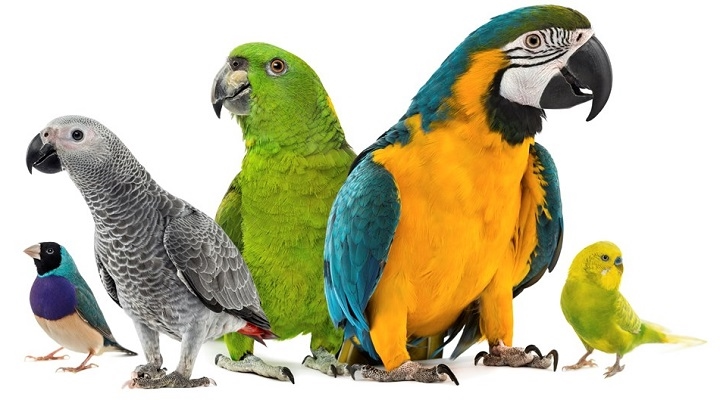
Birds are among the most diverse and captivating creatures on Earth. Found in every corner of the planet, from snowy tundras to tropical rainforests, birds boast an array of incredible features—from their vibrant feathers and melodic calls to their ability to fly, swim, or even mimic human speech. Whether you’re a casual bird watcher or a serious ornithologist, these 100 facts will help you appreciate our feathered friends like never before.
100 Fascinating Facts About Birds
1.There are over 11,000 known species of birds in the world.
2. The ostrich is the largest living bird, growing up to 9 feet tall.
3. Hummingbirds are the only birds that can fly backward.
4. The bee hummingbird is the smallest bird, weighing less than a penny.
5. Penguins are flightless birds but excellent swimmers.
6. The Arctic tern migrates around 44,000 miles annually—from the Arctic to Antarctica and back.
7. Birds are descendants of theropod dinosaurs.
8. The lyrebird can mimic chainsaws, camera shutters, and human speech.
9. Birds have hollow bones, making them lighter and capable of flight.
10. The fastest bird in level flight is the common swift, reaching speeds of 69 mph.
11.The peregrine falcon is the fastest animal on the planet, diving at over 240 mph.
12. Parrots can live for over 80 years.
13. The kakapo is the world’s only flightless parrot.
14. Owls can rotate their heads up to 270 degrees.
15. Birds don’t have teeth—they use their beaks to break down food.
16. A group of crows is called a “murder.”
17. Flamingos get their pink color from their shrimp-based diet.
18. Male birds often have brighter plumage to attract mates.
19. The wandering albatross has the longest wingspan—up to 12 feet.
20. Woodpeckers have special shock-absorbing skulls to protect their brains.
21.Some species of ducks sleep with one eye open.
22. The American robin is one of the first signs of spring in North America.
23. Birds have a specialized voice box called a syrinx.
24. The horned screamer has a long horn-like projection on its head.
25. Male emperor penguins incubate eggs on their feet for two months in the freezing cold.
26. Some birds, like pigeons, can detect Earth’s magnetic field.
27. The shoebill stork is known for its dinosaur-like appearance.
28. Cuckoos lay their eggs in other birds’ nests.
29. Birds communicate through song, plumage display, and dance.
30. The kiwi bird is nearly blind and relies on its sense of smell.
31.The secretary bird uses powerful kicks to kill snakes.
32. Birds have better vision than humans—many see ultraviolet light.
33. The hoatzin chick has claws on its wings to help climb.
34. Swifts spend most of their lives flying—even sleeping mid-air.
35. Birds tend to clean feathers and spread natural oils.
36. Male bowerbirds build intricate structures to impress females.
37. The northern cardinal can see colors we cannot.
38. Some birds mimic other animals to scare off predators.
39. The European robin sings all year round—even during winter.
40. House sparrows have adapted perfectly to urban life.
41.The cassowary is considered the most dangerous bird.
42. Some birds use tools—like sticks—to get insects out of holes.
43. The raven is one of the smartest bird species.
44. Owls have asymmetrical ears to pinpoint prey in the dark.
45. Parrots can understand basic arithmetic.
46. The red knot bird can double its weight before migrating.
47. Gulls can drink seawater and excrete the salt.
48. The African grey parrot can learn hundreds of words.
49. The great horned owl can crush bones with its talons.
50. Some birds form lifelong pair bonds.
51.Geese are known for flying in V formations to conserve energy.
52. The manakin bird performs moonwalk-like mating dances.
53. A peacock’s tail can be up to 60% of its body length.
54. Songbirds learn their songs just like humans learn language.
55. The cassowary has a helmet-like casque on its head.
56. The sunbittern displays wing patterns resembling large eyes to scare predators.
57. The resplendent quetzal has tail feathers longer than its body.
58. Some birds, like pigeons, were used in wartime for delivering messages.
59. Robins have an internal compass for navigation.
60. The weaver bird builds elaborate hanging nests.
61.The raven can solve puzzles and remember faces.
62. Birds have three eyelids—upper, lower, and nictitating membrane.
63. The harpy eagle is one of the world’s most powerful raptors.
64. The oilbird uses echolocation like bats.
65. Some birds sleep while flying long distances.
66. The toucan’s large bill helps regulate body heat.
67. The frigatebird can stay aloft for more than a week.
68. Crows have been observed using traffic to crack nuts.
69. Barn owls can hunt in total darkness.
70. The ibis was sacred to the ancient Egyptians.
71.The turkey was once considered for the U.S. national bird.
72. Male sage grouse puff up air sacs to impress females.
73. Snowy owls are native to the Arctic tundra.
74. Vultures have highly acidic stomachs to digest carrion.
75. Some parrots pass down vocalizations through generations.
76. The secretary bird’s name comes from its feathered “quills.”
77. Jays can hide hundreds of seeds and remember their locations.
78. The golden eagle is a national symbol in many countries.
79. Some birds use spiderwebs to build their nests.
80. Puffins use their colorful beaks to attract mates.
81.The bald eagle builds one of the largest bird nests—up to 2 tons.
82. The albatross can sleep while gliding over the ocean.
83. Roadrunners can outrun humans in short bursts.
84. The bird-of-paradise performs intricate dances for courtship.
85. Some pigeons can recognize themselves in mirrors.
86. The pigeon was the first domesticated bird.
87. Birds molt to replace old feathers with new ones.
88. The toucan’s beak is surprisingly lightweight.
89. The magpie is one of the few non-mammals to recognize itself.
90. The dodo bird went extinct in the 1600s.
91.The swiftlet builds its nest from hardened saliva—used in bird’s nest soup.
92. The common loon has eerie, haunting calls.
93. Sandhill cranes perform dancing rituals as part of courtship.
94. The harlequin duck prefers fast-moving mountain streams.
95. Birds often use Earth’s magnetic field for long migrations.
96. A bird’s beak shape often reveals its diet.
97. The Amazon rainforest hosts over 1,300 bird species.
98. Some birds play—just for fun or to learn.
99. The American goldfinch changes its color seasonally.
100. Birds are vital pollinators and seed dispersers in many ecosystems.
Whether it’s their fascinating behavior, astounding intelligence, or beauty in flight, birds continue to enchant and inspire. From hummingbirds to eagles, each feathered creature tells a unique story of evolution, adaptation, and survival in the natural world. Keep an eye on the skies—you never know what remarkable bird you might spot next.
