

When you think of the color blue in nature, birds often come to mind. Bluebirds perched on fence posts, dazzling blue jays darting through trees, and tropical kingfishers gliding over water — these striking birds capture attention instantly. But what birds are blue, and how do they get their brilliant color? Unlike pigments that reflect green or red, blue in bird feathers comes from microscopic structures that scatter light. This means their vibrant hue depends on feather structure rather than dye-like chemicals.
Let’s explore the most beautiful birds that are blue — from backyard favorites to exotic species — and what makes them truly special in the avian world.
Blue Jay (Cyanocitta cristata)
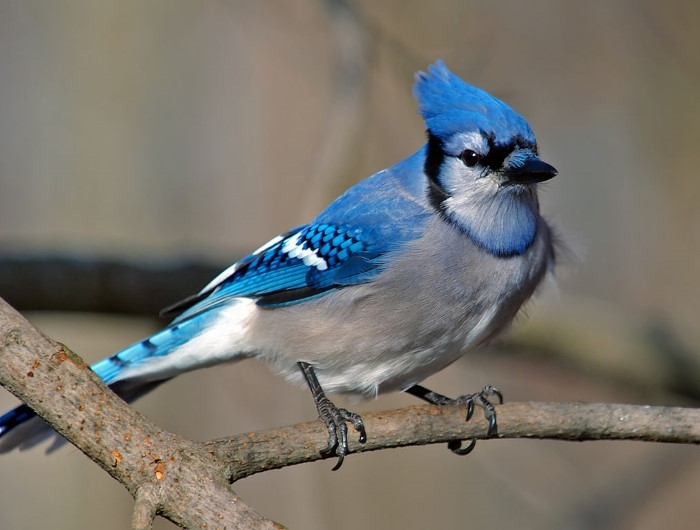
One of North America’s most iconic birds, the blue jay is loud, bold, and beautifully blue. Found across the eastern and central United States, these birds have striking patterns of blue, black, and white. Their crest, face markings, and shimmering blue back make them unmistakable.
They’re also intelligent, known for mimicking hawk calls and caching food for later. Blue jays are a common sight at feeders, especially those offering peanuts and sunflower seeds.
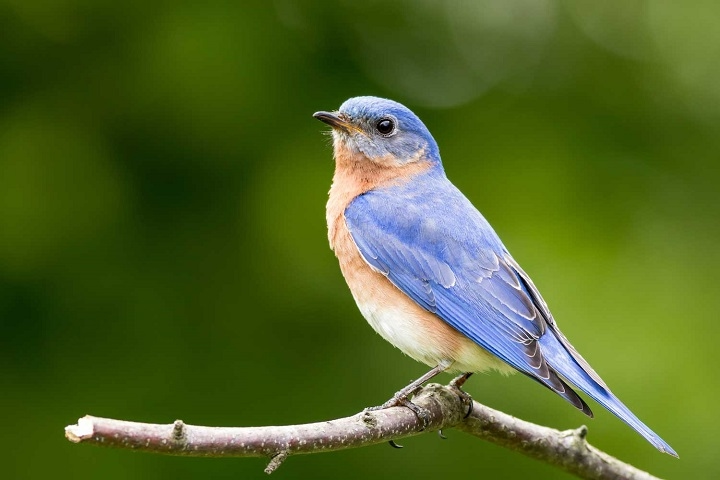
Eastern Bluebird (Sialia sialis)
This small thrush is beloved for its vibrant royal blue plumage and reddish-orange chest. Males are more vividly colored than females, but both are beautiful. These birds often nest in tree cavities and birdhouses in open woodlands, fields, and orchards.
Eastern bluebirds are a symbol of happiness and renewal, often associated with spring.
Indigo Bunting (Passerina cyanea)
The male indigo bunting is covered in a rich blue that glows in sunlight. This songbird breeds across eastern North America and migrates to Central America in the winter.
Females are brownish with slight blue tinges, making the males’ transformation during breeding season all the more impressive. Their high-pitched songs can be heard in rural fields, along roadsides, and forest edges.
Mountain Bluebird (Sialia currucoides)
These birds are sky-blue from head to tail, especially males. Mountain bluebirds live in the western United States and Canada, preferring open meadows and grasslands.
Unlike the eastern bluebird, the mountain bluebird has less reddish coloring and a more uniformly pale blue underside.
Hyacinth Macaw (Anodorhynchus hyacinthinus)
Native to South America, this macaw is the largest flying parrot in the world. Its cobalt blue feathers and bright yellow eye-rings make it visually stunning. Hyacinth macaws are intelligent and affectionate, often kept as exotic pets — though this has led to population declines in the wild.
They primarily feed on nuts, especially from palm trees, and are often seen in pairs or small family groups in Brazil and Bolivia.
Tree Swallow (Tachycineta bicolor)
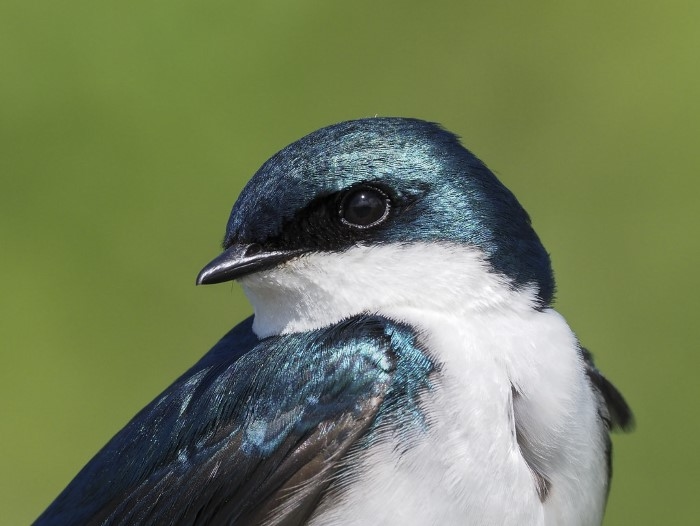
These swallows shine with iridescent blue-green backs and crisp white underparts. Fast and agile in flight, they nest in cavities and are commonly found near water.
Tree swallows migrate long distances and help control insect populations by feeding on flies, mosquitoes, and beetles.
Blue Grosbeak (Passerina caerulea)
Males of this species are a deep, velvety blue with chestnut wing bars. Blue grosbeaks are secretive and often go unnoticed, though their warbling songs reveal their presence in shrubby habitats and open woodlands.
Their strong beaks help them crack seeds and forage for insects during breeding season.
Cerulean Warbler (Setophaga cerulea)
Named after its sky-blue back and white belly, the cerulean warbler is a small, fast-moving forest bird. Found in eastern North America during summer, it migrates to South America for winter.
Unfortunately, it is one of the fastest-declining songbirds due to habitat loss, especially in mature deciduous forests.
Blue Rock Thrush (Monticola solitarius)
This Old World species can be found across southern Europe, northern Africa, and parts of Asia. Males are covered in deep blue, while females are duller brown. These birds are solitary and often nest on rocky cliffs or ruins.
Their flute-like songs echo from mountainsides, making them both visually and audibly stunning.
Common Kingfisher (Alcedo atthis)
Also called the Eurasian kingfisher, this bird is a brilliant blue-and-orange hunter of rivers and streams. Its back glistens with electric blue, while its underparts glow orange.
Despite their beauty, kingfishers are shy and often hard to spot, flashing by in a blur as they dart toward the water.
Steller’s Jay (Cyanocitta stelleri)
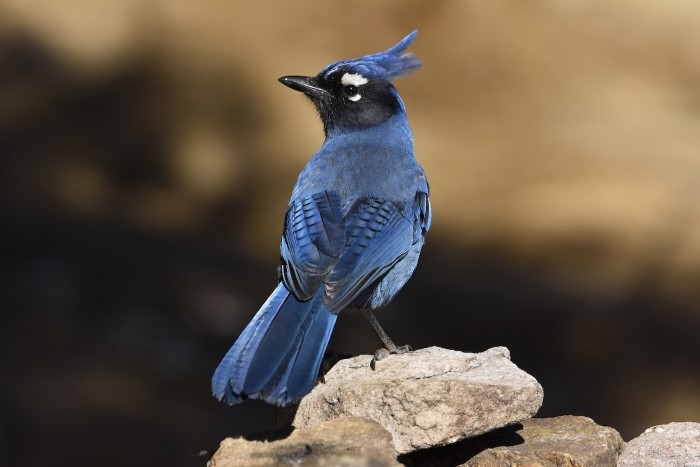
A close cousin of the blue jay, Steller’s jays are native to the western forests of North America. They have deep blue bodies with black crests and heads, often adorned with subtle white streaks.
Known for their raspy calls and intelligence, these jays are curious and bold, often stealing food from campsites or feeders.
Blue Whistling Thrush (Myophonus caeruleus)
Found in the Himalayas and parts of Southeast Asia, this bird has a glossy blue body with speckles and a strong, beautiful song. They often live near mountain streams and are known for their melodious, whistling calls.
They feed on insects, berries, and small animals like frogs and snails.
How Do Birds Get Their Blue Color?
Unlike red or yellow feathers, which come from pigments called carotenoids, blue coloration in birds is structural. Microscopic layers in the feathers scatter light in such a way that only blue wavelengths are reflected to our eyes.
This means: If you crush a blue feather, it turns brown or gray — because the structure is destroyed. In some species, like the indigo bunting or blue jay, lighting conditions affect how brilliant their blue looks.
This form of coloration, called structural coloration, explains why blue is rare in mammals but common in birds and butterflies.
Blue Birds in Culture and Symbolism
Blue birds often represent peace, hope, and happiness. The phrase “bluebird of happiness” comes from cultural traditions in Europe and North America, where spotting a bluebird is believed to bring joy.
In Chinese art, blue birds are associated with immortality. In Native American cultures, they symbolize transformation and renewal.
In literature and song, bluebirds frequently appear as symbols of optimism, love, and serenity.
Where Can You Spot Blue Birds?
Many blue birds are found in North America, particularly in open spaces, forests, or near water sources. Others are native to tropical regions and best observed on nature tours or birding expeditions.
Tips for finding blue birds: Use binoculars during early morning hours, when birds are most active. Look for open perches like fences, wires, or tree branches. Listen for their distinct calls or songs. Set up bird feeders with mealworms or sunflower seeds to attract bluebirds and grosbeaks.
If you live near wooded areas, water, or open grasslands, chances are good that you’ll spot at least one type of blue bird during the year.
FAQs
What causes blue feathers in birds?
The blue color is created by the feather’s structure, not pigment. Light scatters off microscopic structures, reflecting blue wavelengths to our eyes.
Are male blue birds more colorful than females?
Yes, in most species. Males often display brighter colors to attract mates, while females are more camouflaged for nesting and protection.
Do blue birds migrate?
Many do. Eastern bluebirds, indigo buntings, and tree swallows migrate between North and Central America seasonally.
Which is the bluest bird in the world?
The hyacinth macaw is often considered the bluest due to its deep cobalt feathers and sheer size.
Can bluebirds be found in backyards?
Yes! Eastern and mountain bluebirds will nest in backyard birdhouses if placed properly and filled with mealworms or berries.
