

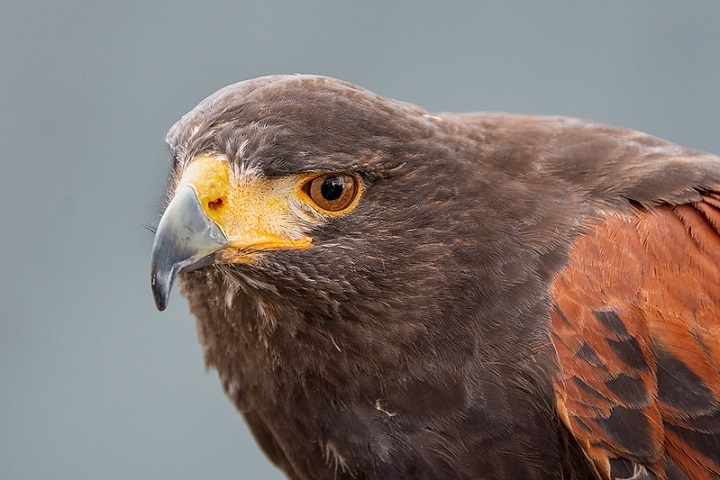
The desert is often seen as a barren, lifeless environment, but it is home to a surprisingly diverse range of wildlife, including a number of powerful and resilient birds of prey. These raptors, with their keen eyesight, powerful talons, and specialized hunting skills, are perfectly adapted to thrive in the harsh conditions of the desert. In this article, we will explore the fascinating world of desert birds of prey, highlighting some of the most notable species, their unique adaptations, and the important roles they play in their ecosystems.
Introduction to Desert Birds of Prey
Desert ecosystems, often characterized by extreme temperatures, sparse vegetation, and limited water sources, are challenging habitats for most creatures. However, birds of prey, or raptors, have evolved over millennia to become some of the most effective hunters in these unforgiving environments. These raptors include hawks, eagles, falcons, and owls, each of which has specialized traits that help them survive in the desert.
Whether soaring high above the sand dunes or perched on a rocky cliff, desert birds of prey are truly remarkable creatures. They are often at the top of the food chain in their ecosystems, playing a vital role in controlling populations of smaller animals and maintaining the balance of the desert’s fragile ecology.
In this article, we will delve deeper into the lives of these incredible birds, explore the challenges they face, and highlight the unique characteristics that make them perfectly suited for life in the desert.
Common Desert Raptors
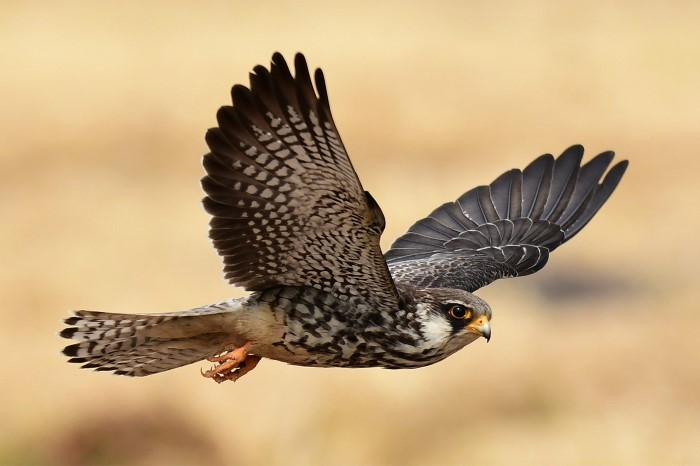
The Peregrine Falcon (Falco peregrinus)
One of the most iconic birds of prey in the desert, the Peregrine Falcon is known for its speed, agility, and exceptional hunting skills. Although it is found in a wide variety of habitats, the Peregrine Falcon has become a well-adapted predator in desert environments, particularly in arid regions such as the deserts of the southwestern United States and parts of the Middle East.
The Peregrine Falcon’s hunting method is truly spectacular. It dives at incredible speeds—sometimes exceeding 200 miles per hour—to strike its prey mid-air. This speed, combined with its sharp talons, makes it one of the most efficient hunters in the animal kingdom. In the desert, Peregrine Falcons typically hunt birds and small mammals, often taking advantage of the wide-open spaces to spot their prey from great distances.
The Harris’s Hawk (Parabuteo unicinctus)
Unlike many other desert raptors, the Harris’s Hawk is known for its social behavior. These birds of prey often hunt in groups, using cooperative tactics to catch their prey. This makes them one of the few raptors that display such communal hunting strategies. Harris’s Hawks are commonly found in the deserts of the southwestern United States, particularly in Arizona and New Mexico.
These hawks are medium-sized, with dark brown plumage and striking yellow legs. Their diet mainly consists of small mammals, reptiles, and birds. Their ability to hunt in groups allows them to take down larger prey, which many other raptors would struggle to catch alone. The teamwork and communication between Harris’s Hawks are crucial to their success in the desert environment.
The Desert Eagle (Aquila nipalensis)
The Desert Eagle, also known as the Steppe Eagle, is a large bird of prey that can be found in the arid regions of Central Asia, the Middle East, and North Africa. This majestic raptor is known for its strength, keen eyesight, and ability to navigate vast, open desert landscapes in search of food.
Desert Eagles primarily hunt small mammals, such as rodents, and birds, but they have been known to take down larger prey, such as hares and even small ungulates. With their powerful beaks and talons, Desert Eagles are capable of delivering deadly blows to their prey, making them formidable hunters in the desert. Their ability to soar high in the sky allows them to spot potential meals from great distances, giving them a clear advantage in the wide, open desert.
The Barn Owl (Tyto alba)
The Barn Owl is another raptor that thrives in desert environments. While owls are often associated with forests and woodlands, the Barn Owl is highly adaptable and can be found in a variety of habitats, including the desert. Barn Owls are nocturnal hunters, relying on their acute sense of hearing to locate prey in the dark.
In desert ecosystems, Barn Owls primarily hunt small mammals, such as rodents, which are abundant in arid regions. Their ability to hunt at night gives them a significant advantage, as they are able to catch prey that may be difficult for daytime predators to find. Barn Owls also have specialized feathers that allow them to fly silently, making them stealthy hunters in the desert’s quiet, still nights.
The Golden Eagle (Aquila chrysaetos)
The Golden Eagle is one of the largest and most powerful raptors found in desert ecosystems. It is found in a variety of habitats, including the deserts of North America, Asia, and the Middle East. Golden Eagles are known for their strength and incredible hunting skills, making them apex predators in their habitats.
Golden Eagles primarily hunt large mammals, such as rabbits, foxes, and even young deer. Their powerful talons and sharp beaks enable them to capture and kill prey that is much larger than themselves. Golden Eagles are capable of flying long distances in search of food, and they use their keen eyesight to spot potential prey from great heights. In desert environments, where food can be scarce, the Golden Eagle’s ability to cover vast areas in search of prey gives it a significant advantage.
Adaptations for Surviving in the Desert
Desert birds of prey have evolved several unique adaptations to thrive in the harsh conditions of their environment. These adaptations help them conserve energy, find food, and survive the extreme temperatures of the desert.
Exceptional Vision
Raptors are known for their incredible eyesight, and this is especially important in the desert, where spotting prey from a distance is essential. Birds of prey, including those in desert ecosystems, have specially adapted eyes that allow them to see clearly at great distances. Some raptors, such as the Peregrine Falcon, can see up to eight times better than humans, giving them an advantage when hunting in vast, open spaces.
Efficient Thermoregulation
Desert birds of prey are capable of regulating their body temperature to avoid overheating in the extreme heat of the desert. Many species of raptors are active during the cooler parts of the day, such as early mornings and late afternoons. Some, like the Barn Owl, are nocturnal, hunting primarily at night when the temperatures are lower. In addition, raptors have specialized feathers that help insulate them from the heat and keep their bodies cool.
Acute Hearing
Owls, in particular, are known for their exceptional hearing. This adaptation allows them to hunt at night, when their prey is often hidden from sight. The Barn Owl, for example, has an asymmetrical ear structure that helps it pinpoint the exact location of its prey by listening to the sounds made by small mammals, such as rodents, in the desert.
Efficient Flight
Many desert raptors are known for their exceptional flying abilities. Raptors like the Golden Eagle and the Harris’s Hawk are powerful fliers, capable of covering large areas in search of prey. Their large wingspans allow them to soar effortlessly in the air, conserving energy as they glide over the desert landscape. This is particularly important in the desert, where food can be scarce, and raptors need to cover long distances to find a meal.
FAQs about Desert Birds of Prey
What are desert birds of prey?
Desert birds of prey, also known as raptors, are birds that hunt in desert ecosystems. They include species like the Peregrine Falcon, Harris’s Hawk, and Golden Eagle.
How do desert birds of prey hunt?
Desert raptors typically hunt using their keen eyesight and powerful talons to capture prey. Some, like the Barn Owl, are nocturnal hunters, while others hunt during the day.
What do desert birds of prey eat?
Desert birds of prey primarily eat small mammals, birds, and reptiles. Some, like the Golden Eagle, can hunt larger prey such as foxes and rabbits.
How are desert birds of prey adapted to survive in harsh conditions?
Desert raptors have evolved adaptations such as exceptional vision, efficient thermoregulation, and acute hearing to survive in the extreme heat and arid conditions of the desert.
Are desert birds of prey endangered?
Some species of desert raptors, like the Golden Eagle, face threats from habitat loss and human activities. However, many raptors are protected by conservation efforts.
Desert birds of prey are among the most fascinating and well-adapted creatures in the animal kingdom. Their incredible hunting abilities, unique physical traits, and specialized behaviors allow them to thrive in one of the harshest environments on Earth. From the powerful Peregrine Falcon to the stealthy Barn Owl, each of these raptors plays a crucial role in maintaining the balance of desert ecosystems. Through their remarkable adaptations, they continue to capture the imagination of wildlife enthusiasts and scientists alike.
