

Some mornings, shape tells the story before color does. A silhouette slices the sky. A bill like a compass needle points the way. You’re looking at birds with long beaks—engineered for reach, precision, and survival. From mudflats to marsh edges, from garden flowers to ocean surf, these long-billed birds turn hunger into art. In this warm, practical guide, we’ll map what those beaks mean, how to identify common groups, where to find them, and how to watch them well. Short steps. Clear wins. And yes, you’ll see why birds with long beaks feel like poetry in motion.
Why Long Beaks? Form That Follows Food
Evolution writes a sharp pen. For long-billed birds, the bill is a toolbox—pipette, spear, sieve, knife, even a thermometer in some fruit-eaters.
Functions of Long Beaks
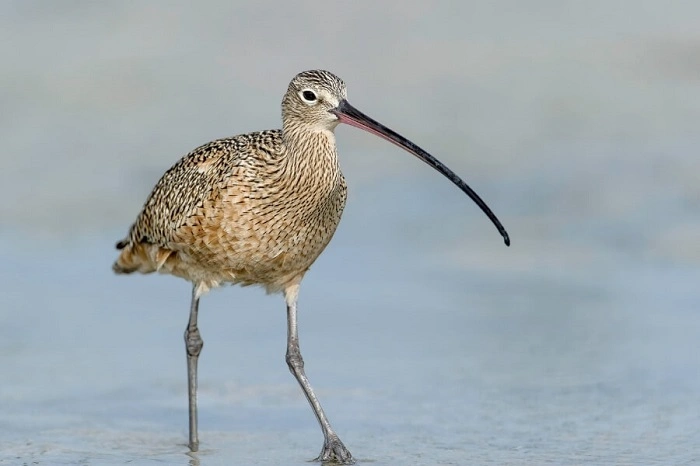
- Digging: Dig deep into mud for worms and crustaceans (curlews, godwits, snipes).
- Stabbing: Pierce fish with a flash of lightning (herons, egrets, storks).
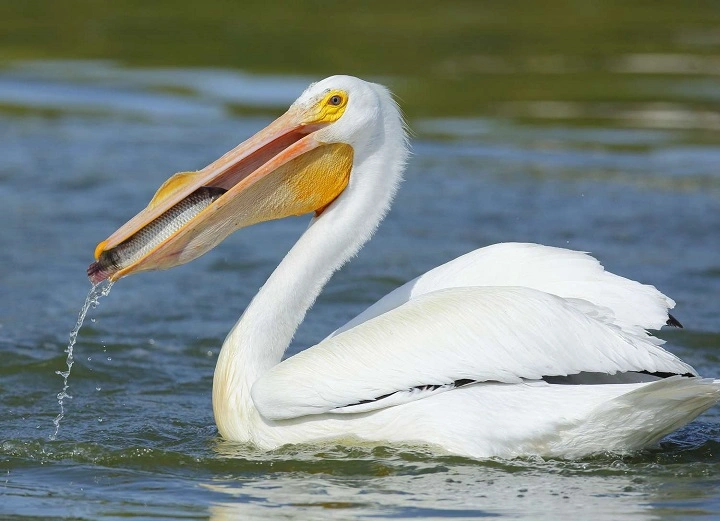
- Scoop and Sift: Capture prey or strain tiny life (pelicans scoop; flamingos sift).
- Sweep: Feel and sweep side to side for hidden morsels (spoonbills).
- Skim: Slice the water surface with a sharp-pointed lower mandible (black skimmer).
- Sip Nectar: Insert into long corollas (sword-billed hummingbird—bill is longer than body!).
- Wedge or Pry: Break open bivalves and limpets (oystercatchers).
- Sense in the Dark: Locate prey through touch and smell (kiwi, with nostrils near tip).
All design is problem-solving. You can read the menu on the bill through reading.
Field ID: A Quick Framework for Long-Billed Birds
You can read the story in a glance. Give this three-step scan a try.
Step 1: Bill Shape and Curve
- Downcurved: Curlew, ibis.
- Upturned: Avocet.
- Straight dagger: Heron, egret, stilt.
- Flattened spoon: Spoonbill.
- Massive but light: Toucan (long, cellular bill).
- Lower mandible longer: Skimmer.
Step 2: Leg Length and Body Silhouette
- Extremely long legs and long beak? Shorebird or wader, likely.
- Short legs, hover flight? Nectar specialist.
- Heavy body with pouch? Pelican.
Step 3: Foraging Style
- Probing in soft mud → sandpiper clan.
- Stiff stance, rapid stab → heron tribe.
- Side-to-side sweeping → spoonbill.
- Surface slicing at twilight → skimmer.
With practice, birds with long beaks fit into simple stories.
First Places to Look
These bills point you towards water, edges, and bloom.
Coasts and Mudflats
Tide out, table set. Curlews, godwits, knots, oystercatchers on the lookout. Long bills probing where we see only ripples.
Marshes and River Edges
Herons, egrets, storks, spoonbills. Quiet water. Patient stalker. A flash of sudden success.
Lagoons and Salt Pans
Avocets and stilts. Gracious legs. Upturned or needle-straight bills, stitching the waterline.
Forest and Shrub Gardens
Hummingbirds of the Americas. Narrow, long bills spanning the curve between flower and flight. In the darkness of Southern Hemisphere night forests—kiwi, searching the ground.
Tropical Fruit Forests
Toucans and hornbills. Extended beaks project, toss, and even dispel heat. Fruit, insects, small prey—menus that vary.
Feeding Mechanics: Tiny Miracles in Every Motion
Watching long-beaked birds is akin to listening to a well-tuned instrument. Precision. Rhythm. Grace.
Probing
Curlews and snipes shove the bill in, poke with tips that are nerve-rich, and bend only the distant end to capture prey. It’s tweezers in the bottom of the world.
Spearing
Herons interweave patience with power. That straight bill is a rapier. Stillness builds. The strike finishes the sentence.
Filtering and Sweeping
Flamingos pump tongues like pistons to filter life from brine. Spoonbills sweep, bills slightly open, reacting to touch.
Skimming
At dusk, skimmers tip the long lower mandible into the water and plane forward. When it hits prey, the bill snaps shut—pure choreography.
Nectar Feeding
Hummingbirds don’t “sip” with the beak. The bill opens the door. The tongue does the work—forked and fast, lapping nectar at dizzying rates.
Spotlight: Five Families, Five Stories
Curlews (The Downcurled Script)
Bills that sweep like brushstrokes. They write across the mud in soft curves. Their reach enables them to feed where short-billed friends can’t, reducing competition on packed shores.
Herons and Egrets (The Still Hunters)
Cathedral stance. Needle bills. They sew water to still, then slash. Fish, frogs, even small mice sometimes fall to that neat geometry.
Spoonbills and Ibises (The Tactile Foragers)
Flat-ended or curved bills, produced for sense of touch. They use their sense of touch more than sight—perfect for muddy shallows and dark reed beds.
Oystercatchers (The Bright Blades)
Orange blades that pry shellfish open or shatter them apart. Beaches are kitchens. The timing of the tide is the secret.
Hummingbirds and Toucans (Delicate and Daring)
One drinks light in liquid form; the other tosses fruit with flair. Both show how birds with long beaks are featherlight and strong.
Migration, Seasons, and When to Look
Most of the long-billed shorebirds are marathoners. They follow the endless spring—north to breed, south to feed. Best passage is usually the best variety. Dawn and late afternoon give you the soft light that you require for identification and photo. Mudflats are replenished by storms with life. The visitors arrive hungry, and the show begins.
Conservation: Gentle Strength Needs Gentle Hands
They rely on fragile sites—mangroves, tidal flats, wetlands, flower-lined corridors. Marshes are drained, shorelines hardened, and hedges cut to pilfer the pantries they were meant to feed.
Easing the Situation in Simple Ways
- Get yourself a voice and speak out for wetland restoration and conservation.
- Let mudflats breathe; flush once, and a migrant may go hungry for a meal it had to fly another 500 miles.
- Sow indigenous wildflowers and prune pesticides; nectar paths feed little tourists.
- Make glass clear; window decals rescue lives in flyways.
When we restore edges, long-billed birds return. Sometimes earlier than we expected.
Photography and Observation Tips
Put on patience like an extra lens. Let the birds choose the distance.
- Kneel near shorelines; lower your profile.
- Circumvent in curves, not in straight lines. Predators approach straight.
- Watch the tide charts; arrive when water is ebbing to expose fresh feeding bands.
- For hummingbirds, sit over a flower bed and wait. Activity will locate you.
A minute of quiet is often the path to the best shot.
Backyard Possibilities
Some long-billed birds need coasts and marshes. Others will discover you at your spot.
- Hummingbirds: Offer native tubular flowers and clean sugar water (1:4, no dye), refreshed every 1–2 days in heat.
- Shallow Water Features: A bubbler draws migrants during dry spells.
- Native Planting: Flower succession from spring to fall keeps energy available for tiny long-billed visitors.
Even small balconies can play host to brief, bright encounters.
Mini Field Cards: Quick IDs You’ll Love
- Long-billed Curlew: Wash of cinnamon-rimmed, strong downward curve, open grass and tidal flats.
- American Avocet: Upturned bill, glossed black-and-white wings, blue-gray legs; graceful sweeps across shallow water.
- Black Skimmer: Lower mandible knife-edged, longer than the upper one, crepuscular flight over smooth surfaces.
- Roseate Spoonbill: Spoon-shaped, pink bill; slow side-to-side in quiet lagoons.
- Great Egret: Tall, all-white, yellow dagger bill; prayer-like stance near shorelines.
- Sword-billed Hummingbird: Bill longer than body length; Andean high-altitude flowers, impressive extension.
Place these in your mind pocket. The next shoreline stroll will be a reunion.
Why They Captivate the Heart
Because the purpose is beautiful. Long-beaked birds show their calling where we get to witness it. Tools made into beauty. Hunger made into dance. They remind us that design is not ornament; its dedication to the art of living. And for some reason, watching them do what they were meant to do gives us courage about our own work.
FAQs: Birds with Long Beaks
Where can I best see birds with long bills?
Tidal mudflats, marshes, mangroves, river mouths, and, for nectar-feeders, nectar-rich gardens or woodland edges.
How do I identify a curlew at distance from an ibis?
Curlews are long-legged shorebirds with a thin, downcurved bill; ibises are more stocky-bodied waders with curved bills and generally feed by tactile probing.
Can I get long-billed birds into a city garden?
Amen to nectar specialists—plant native tubular flowers and keep the feeder clean. Waders and shorebirds need natural wetlands.
Why are some long-billed shorebirds so hard to ID?
Seasonal plumage molt; juvenile vs. adult patterns are different. Examine bill shape/length, leg color, and foraging style.
What’s one simple thing to do to assist birds with long bills?
Conserve and treat wetlands: keep a distance on mudflats, don’t flush flocks, and support local habitat restoration.
Stand at the edge of the water at low tide. Watch the tentative steps. The careful arcs of bills scratching lines in the sand. In gardens, stand close to flowers as afternoon mellows. A whir. A hover. A dart. The world is full of purpose if we slow down enough to notice it. Long-billed birds show that reach matters—reach for food, for distance, for life. Let us keep the places where that range still holds true. And may their understated expertise ground our own.
