


In the bustling world of backyard birdwatching, two familiar visitors often steal the show with their distinctive appearances and charming behaviors: the female House Finch and the Sparrow. Despite their similarities in size and habitat preference, these two species boast unique features that set them apart. In this blog post, we embark on a comparative journey to explore the distinguishing characteristics of the female House Finch and Sparrow, shedding light on their fascinating biology, behavior, and role in our urban ecosystems.
Anatomy and Plumage
Female House Finch:

The female House Finch (Haemorhous mexicanus) is renowned for its subtle yet elegant appearance. Sporting a mix of brown, gray, and streaked plumage, the female House Finch is often distinguished by its muted colors and finely streaked underparts. Its relatively slender bill is adapted for cracking seeds and foraging on various plant materials.
Sparrow:
Sparrows encompass a diverse group of species belonging to the family Passeridae, with the House Sparrow (Passer domesticus) being one of the most ubiquitous. Female sparrows typically exhibit brown and gray plumage, with streaked patterns adorning their underparts. Their rounded bodies and short, conical bills reflect their omnivorous diet, which includes seeds, insects, and small fruits.
Habitat and Distribution
House Finch:
Native to western North America, the House Finch has expanded its range across much of the continent, thanks in part to its adaptable nature and ability to thrive in urban and suburban environments. These birds are commonly found in backyards, parks, and agricultural areas, where they frequent feeders and forage for seeds, berries, and insects.
Sparrow:
Sparrows are a cosmopolitan group, with various species inhabiting diverse habitats worldwide. The House Sparrow, in particular, is a familiar sight in urban and rural landscapes across North America and beyond. These adaptable birds are often found in close proximity to human habitation, nesting in buildings, bushes, and other structures.
Behavior and Vocalizations
House Finch:
Female House Finches are typically social birds, often seen foraging in small flocks or congregating at bird feeders. Their melodious songs, though less complex than those of males, consist of cheerful chirps and trills that add a pleasant soundtrack to backyard environments. They communicate with soft, musical calls and engage in subtle courtship displays during the breeding season.
Sparrow:
Sparrows are renowned for their gregarious nature and vocal prowess. Female sparrows emit a variety of calls and chirps, including sharp chip notes and melodious trills, to communicate with their flock members and establish territories. They are often seen foraging in large groups, scratching for food on the ground or perching in shrubs and trees.
Reproduction and Nesting
House Finch:
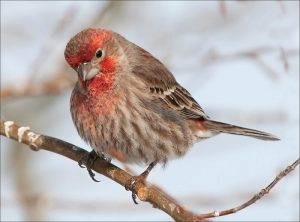
Female House Finches are responsible for constructing their nests, which are typically built in shrubs, trees, or human-made structures such as eaves and window ledges. These cup-shaped nests are crafted from twigs, grasses, and other plant materials and lined with softer materials such as feathers and hair. Female House Finches typically lay 3-6 eggs per clutch and may raise multiple broods in a single breeding season.
Sparrow:
Sparrows are prolific breeders known for their adaptable nesting habits. Female sparrows build their nests in a variety of locations, including bushes, trees, and man-made structures such as building eaves, vents, and birdhouses. Their nests are constructed from twigs, grasses, and other plant materials and are often lined with feathers and other soft materials. Female sparrows lay clutches of 3-5 eggs and may raise multiple broods throughout the breeding season.
Interaction with Humans
House Finch:
Female House Finches are frequent visitors to backyard bird feeders, where they eagerly partake of sunflower seeds, millet, and other offerings. Their presence adds color and vitality to urban and suburban landscapes, delighting birdwatchers with their cheerful demeanor and melodious songs.
Female House Finch vs. Sparrow
Sparrows, including House Sparrows, are ubiquitous inhabitants of human-altered environments, where they thrive on discarded food, crumbs, and birdseed. While their presence may be considered a nuisance by some, sparrows play important ecological roles as seed dispersers and insect controllers, helping to maintain balance in urban ecosystems.
Related Post:
Unveiling the Spectrum of Colored Duck Eggs: Nature’s Palette of Surprises
Unlocking the Secrets of Duck Hatching: From Egg to Duckling
Tips & Tricks for Confidently Opening a Business
7 Tips for Remodeling Your Backyard
In conclusion, the female House Finch and Sparrow are two iconic representatives of the avian community, each possessing unique characteristics that contribute to their charm and adaptability. While both species share similarities in habitat preference and behavior, they also exhibit distinct traits that reflect their evolutionary history and ecological niche. By appreciating the diversity of birds in our midst, we gain a deeper understanding of the interconnectedness of all living organisms and the importance of preserving biodiversity in our ever-changing world. So, the next time you encounter a female House Finch or Sparrow in your backyard, take a moment to marvel at the beauty and complexity of these remarkable creatures.
