

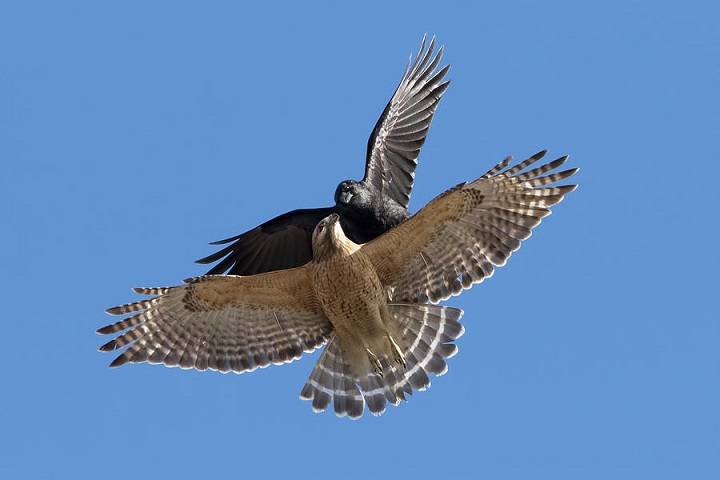
In the vast expanse of the skies, two formidable avian predators often engage in an age-old battle for dominance: hawks and crows. With their sharp talons, keen eyesight, and formidable hunting skills, these aerial titans command respect and admiration in the natural world. In this blog post, we delve into the intriguing rivalry between hawks and crows, exploring their behaviors, interactions, and ecological roles in the intricate web of life.
The Players: Hawks and Crows

- Majestic Hunters: Hawks
- Hawks are birds of prey belonging to the family Accipitridae, renowned for their powerful flight, keen eyesight, and lethal talons.
- With diverse species ranging from the agile Cooper’s hawk to the majestic red-tailed hawk, these predators occupy a wide range of habitats, from forests and grasslands to urban areas.
- Intelligent Scavengers: Crows
- Crows, members of the Corvidae family, are highly intelligent and adaptable birds known for their jet-black plumage and raucous calls.
- With remarkable problem-solving abilities and complex social structures, crows thrive in a variety of environments, from bustling cities to rural landscapes.
Hunting Strategies and Feeding Habits
- Aerial Pursuit: Hawks
- Hawks are skilled hunters that rely on stealth, speed, and precision to capture prey. With their keen vision and aerodynamic prowess, they soar high above their hunting grounds before diving with lightning speed to snatch unsuspecting prey, such as small mammals, birds, and reptiles.
- Opportunistic Feeders: Crows
- Crows are opportunistic scavengers with diverse diets that include fruits, seeds, insects, carrion, and small vertebrates. They often forage in groups, using their sharp beaks and clever tactics to extract food from a variety of sources, including garbage dumps, agricultural fields, and urban areas.
Ecological Roles and Interactions
- Top Predators: Hawks
- As apex predators, hawks play a crucial role in regulating prey populations and maintaining ecosystem balance. By controlling populations of rodents, birds, and other small animals, they help prevent overgrazing, crop damage, and disease transmission in natural and agricultural landscapes.
- Ecosystem Engineers: Crows
- Crows are considered ecosystem engineers due to their foraging behaviors and seed dispersal activities. By scavenging carrion and redistributing seeds across vast landscapes, they influence plant communities and contribute to nutrient cycling and forest regeneration.
Aerial Encounters: Hawks vs. Crows
- Territorial Disputes:
- Hawks and crows often clash over territory, food resources, and nesting sites. Crows, known for their mobbing behavior, will aggressively defend their territories and offspring against perceived threats, including hawks, by mobbing and harassing them in mid-air.
- Mob Mentality:
- When confronted by hawks, crows employ a strategy known as mobbing, where they form large, noisy groups to harass and intimidate their predator. By mobbing together, crows reduce the risk of predation and signal to other members of their group the presence of a potential threat.
Mutualistic Relationships
- Alarm Calls:
- Despite their adversarial interactions, hawks and crows also engage in mutually beneficial relationships. Crows, with their keen awareness and vocal communication skills, often emit alarm calls to alert other birds and animals of the presence of predators, including hawks, benefiting the entire community.
- Scavenging Opportunities:
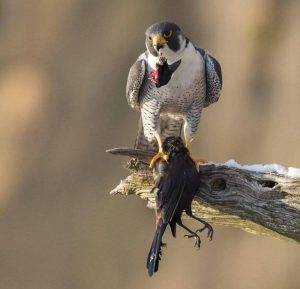
- Additionally, crows may benefit from scavenging opportunities provided by hawks, as they feed on the remains of prey killed by their avian counterparts. By following hawks in flight or perching nearby, crows capitalize on the aftermath of a successful hunt, obtaining valuable nutrients and energy.
Conservation Challenges and Human Interactions
- Urbanization and Habitat Loss:
- Both hawks and crows face threats from habitat loss, pollution, and urbanization. Destruction of natural habitats, conversion of open spaces, and pesticide use can diminish prey availability and nesting opportunities for these avian predators.
Hawks vs. Crows
-
- Human-wildlife conflict can arise when hawks and crows come into contact with human activities, such as agriculture, urban development, and livestock management. While some people appreciate the ecological services provided by these birds, others perceive them as pests or threats to pets and livestock.
Related Post:
Unraveling the Complex World of Aggressive Male Duck Behavior
Deciphering the Ideal Space Requirements for Ducks
Unveiling the Mysterious Egg-Laying Habits of Ducks
Exploring the Essential Role of Duck Grit in Avian Health
In conclusion, the rivalry between hawks and crows exemplifies the intricate dynamics of predator-prey relationships and interspecies interactions in the natural world. While these avian adversaries may compete for resources and territory, they also coexist within the same ecosystems, each playing a vital role in maintaining ecological balance and biodiversity. By understanding and appreciating the behaviors and ecological roles of hawks and crows, we gain insight into the complex web of life and the interconnectedness of species in our shared environment.
