


The Pūkeko bird, a vibrant and culturally significant native of New Zealand, is more than just a common wetland bird. Known for its striking blue plumage and bright red beak and legs, the Pūkeko (Porphyrio melanotus) has carved out a place in folklore, local ecology, and even road signs. While they are often spotted along roadsides and wetlands, there is much more to their story than what meets the eye.
Understanding the Pūkeko Bird: Species and Origins

The Pūkeko is a subspecies of the Australas ail family and is closely related to other swamp hens in Australasia and parts of Southeast Asia.
Physical Characteristics and Behavior
Pūkekos are medium-sized birds with deep blue feathers, long legs, and a stout red bill that extends into a frontal shield on the forehead. They can grow up to 51 cm in length and weigh between 800–1200 grams. Despite their somewhat awkward flying capabilities, they can glide short distances and often use their strong legs to escape predators by running rather than taking flight.
They are social, intelligent, and quite adaptable. Pūkeko birds are known for their loud squawking calls and will often be seen walking or foraging in groups.
Where to Find the Pūkeko Bird in New Zealand
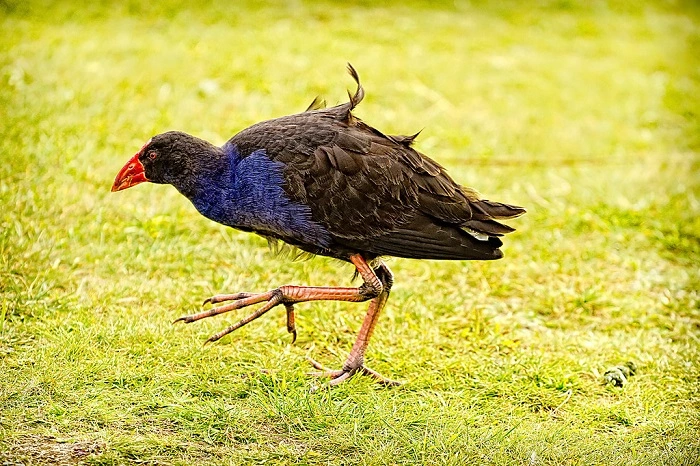
From the North Island to the farthest southern regions, Pūkekos have colonized nearly every lowland region of New Zealand. They are particularly common in areas with marshes, swamps, and damp pastureland. You’ll frequently spot them along roadsides and farmland where water is nearby.
Although native to New Zealand, the species is also found in Australia and some Pacific islands. However, it’s in New Zealand where the Pūkeko holds a place of cultural and symbolic prominence.
Adaptability to Human Environments
What sets the Pūkeko apart is its ability to thrive in modified landscapes. Unlike many other native birds that struggle with urbanization and agriculture, the Pūkeko has adapted well to paddocks, drains, and even city outskirts.
Pūkeko and Māori Culture
The bird’s Māori name, Pūkeko, carries cultural weight. It features in various legends and traditional stories. According to Māori myth, the Pūkeko got its red legs from a fire it helped start by kicking burning embers. As a result, the bird is both admired and occasionally seen as mischievous.
Folklore and Symbolism
In some iwi (tribal) traditions, the Pūkeko symbolizes stubbornness, but it also represents resourcefulness and courage. Because of its vibrant color and behavior, it’s frequently used in teaching children about native species and values of cooperation.
Ecological Role and Diet
Pūkeko birds are omnivorous. Their diet includes a variety of plant matter, small insects, frogs, and worms. They are often seen digging with their strong toes and using their beaks to tear vegetation or extract prey from muddy soil.
Impact on Agriculture
Despite their native status, some farmers see Pūkekos as a nuisance due to their tendency to damage crops and irrigation systems. However, their ecological role in controlling pests and recycling nutrients in wetland ecosystems helps balance their impact.
Breeding Habits and Social Life
Pūkekos are cooperative breeders, a rare trait among birds. Several adults, often related, will help raise the young within one nest. This communal style of parenting increases the chicks’ survival chances and allows the group to protect its territory more effectively.
Nesting and Reproduction
Breeding occurs mostly in spring and summer. Nests are usually built in long grass or reeds. Females lay up to 6 eggs, which are incubated by multiple group members. Once hatched, chicks are precocial, meaning they are born with open eyes and can move shortly after birth.
Conservation Status and Threats
Currently, the Pūkeko bird is not endangered. In fact, its population is stable or increasing in most regions of New Zealand. That said, they still face threats from introduced predators like stoats, ferrets, and domestic cats.
Legal Protection and Management
While Pūkekos are protected under the Wildlife Act, in some regions, special permits allow limited control due to agricultural damage. Any population management, however, is approached with cultural sensitivity due to their significance in Māori culture.
Interesting Facts About the Pūkeko Bird

- Pūkekos can swim well and use their long toes to walk on floating vegetation.
- Despite appearing clumsy, they are excellent runners.
- They are among the few bird species to exhibit group parenting behavior.
- Their call is a loud “kek-kek-kek” often heard in the early morning or evening.
- They are featured in Kiwi children’s books, cartoons, and roadside safety signs.
Frequently Asked Questions (FAQs)
What does a Pūkeko bird eat?
Pūkekos are omnivorous and feed on insects, worms, small frogs, and a variety of plant materials.
Where are Pūkeko birds found in New Zealand?
They are commonly found in wetlands, swamps, farmlands, and road verges across both the North and South Islands.
Are Pūkeko birds endangered?
No, the Pūkeko bird population is stable and is not considered endangered in New Zealand.
Why is the Pūkeko important in Māori culture?
The Pūkeko symbolizes adaptability and courage in many Māori legends and is featured in traditional stories and teachings.
Can you keep a Pūkeko as a pet?
No, Pūkekos are protected wildlife in New Zealand and cannot be kept as pets without special permits.
The Pūkeko bird is a symbol of New Zealand’s unique biodiversity and cultural heritage. With its vivid appearance and bold personality, it continues to capture the hearts of locals and tourists alike. Whether spotted on a rural roadside or featured in folklore, the Pūkeko’s story is one of adaptability, survival, and identity. For bird enthusiasts, cultural historians, or simply curious nature lovers, the Pūkeko represents a living piece of New Zealand’s natural and cultural fabric.
