

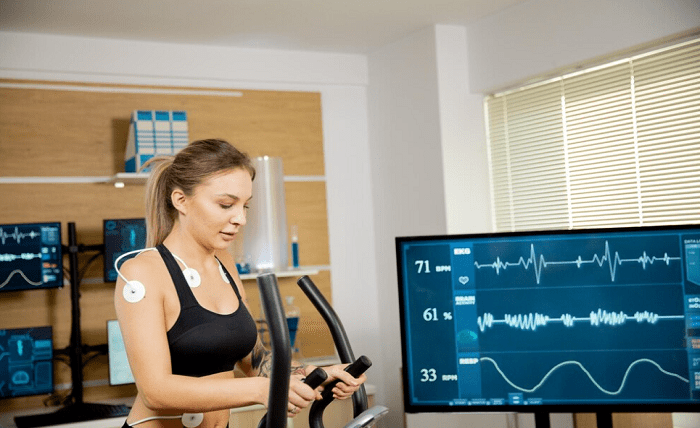
Your heart rate is one way to determine how much effort you put into your workout. To put it plainly, most individual’s heart rates range between 60 to 100 beats per minute when resting. The heart rate rises when you exercise. As your workouts become more intense, your heart rate will increase accordingly. Your body uses more fat stores for energy during exercise when you are in the ideal heart rate range for fat burning, rather than utilizing simple sources of sugar and carbohydrates. This results in a decrease in fat content.
What Is a Fat-Burning Heart Rate?
A fat-burning heart rate refers to the rate at which it is assumed that the body is using more fat as an energy source when exercising. We tend to use more fat as fuel during most moderate-intensity activity, which is defined as heart rates between 60% and 80% of maximal heart rate. The maximum heart rate at which a person’s cardiovascular system can function during physical activity is known as their maximal heart rate.
What Can Affect Heart Rate
Several factors can have an impact on your heart rate. They include:
- Weather: The heart and blood vessels constantly adapt to the environment and what is happening in the body. They keep blood flowing in order to give the different parts of the body the oxygen and nutrients they need. When it gets cold, the nervous system kicks in immediately to maintain the core temperature and keep the vital organs working properly.
When you are cold, your blood vessels tend to narrow down in your skin, fingers, and toes so that less heat is lost. However, this vasoconstriction (meaning ‘narrowing’) results in more pressure throughout the circulation, which consequently raises blood pressure and heart rate by making the heart beat harder to pump blood throughout the body.
- Emotions: Emotional stress starts the cycle of deterioration in your body. If you are sad, agitated, depressed, tense, irritable, frightened, or upset, your body will quickly begin to produce stress hormones. These hormones are comprised of the so-called cortisol and adrenaline. During physical activities, such as training, your body gets preconditioned to better cope with any kind of stress. Your heart beats more quickly due to hormones adrenaline and cortisol, and your blood vessels narrow to allow blood to get to the core of your body.
The hormones also spike your blood sugar and pressure levels. This “fight or flight” mechanism is believed to have been inherited from predator avoidance in ancient times when one required an extra boost of adrenaline to escape. Once your tension is alleviated, your blood pressure and pulse should return to their original levels. If you are stressed out all the time, on the other hand, your body doesn’t have sufficient time to heal. This damage may be the primary cause of your artery wall injury.
- Body weight: Individuals who are overweight may be prone to having a high resting heart rate, a condition that is known to be linked to many diseases of the heart and related organ systems. It may become difficult for the heart to pump blood from place to place when more weight is to be carried. This may cause a rise in blood pressure and an increase in heartbeat.
Obesity also manifests in increased plaque accumulation in the arteries and the consequent narrowing of the arteries (atherosclerosis). Excess body fat can have varying effects on the organs, as it may put pressure on the blood vessels inside. Basically, the decrease in blood flow into the heart can cause your resting heart rate (RHR) to increase as the heart will need to exert more effort to supply blood to all of the body’s organs, muscles, and tissues.
Medications: Sometimes, a regular heartbeat may get interrupted by the use of various medication products such as antibiotics. With the wide range of adverse cardiac events, drugs may lead to frequent types of arrhythmias more often than other categories of cardiac adverse effects. Usually, there are no symptoms, but some may experience their heart racing or feeling it beating. The consequences could be dizziness, fainting, or shortness of breath. HGH can help improve low energy levels, muscle loss, and fat accumulation, positively impacting the heart rate. So, can you get HGH prescribed? The answer is yes. You can get an HGH prescription quickly and easily if you have a valid medical need.
Caffeine and Nicotine: Research has demonstrated that activation of nicotine leads to a raised heart rate and causes both systolic and diastolic blood pressures. Additionally, caffeine facilitates the augmentation of the diastolic blood pressure caused by smoking.
Exercise: Exercise speeds up your heartbeat by contracting it more often to provide the necessary oxygen to various parts of your body. The contractibility of the heart can also be increased by pumping more strongly or by filling the left ventricle with more blood before pumping.
Fat-Burning Heart Rate Chart
If you use the chart below, always take into account that with older age, your high fat-burning heartbeat rate will be lower. For instance, if you are 32, your target heart range for burning fat should be between 31 and 35.
Age Estimated Fat-Burning Rate Per minute
18–20 140
21–25 136–139
26–30 133–136
31–35 129–132
36–40 126–129
41–45 122–125
46–50 119–122
51–55 115–118
56–60 112–115
61–65 108–111
66–70 105–108
71–75 101–104
How To Measure Heart Rate
Simply placing your fingertips on your wrist or the side of your neck will allow you to independently check your pulse rate.
- Immediately below the base of the thumb, place the index and middle fingers of one hand against the other’s wrist.
- Lightly apply pressure on the side of your neck, directly beneath your jaw.
- Multiply the value by four after counting the number of beats in 15 seconds. The value you get is your heart rate.
Alternative Ways for Fat Loss
- Diet: The most important determinant of weight loss is continued calorie deficit. This is simply consuming fewer calories than your body is used to burning every day. Eventually, this will result in weight loss because the body will utilize its fat and glycogen stores for energy.
- Plenty of water: Water can help in fat loss in several ways. It could help you suppress your hunger, burn fat when resting, and make workouts easier and more efficient, all of which could lead to weight loss.
- Yoga (low heart rate sports): Yoga has been linked to both weight reduction and weight maintenance for a variety of reasons, including the energy expenditure involved in the poses, exercising more by reducing back pain and joint pain, becoming more mindful, improving the mood and stress level and making practitioners feel more connected.
In conclusion, a person’s fat-burning heart rate at which fat burns will lie between a range of values determined by their age. Nevertheless, when exercising, a person will burn fat and calories irrespective of their heart rate. Looking forward to burning fat? Share your goals with your doctor today so that they can recommend safe heart rates and appropriate exercises based on your fitness levels and needs.
