


The Whitethroat (Sylvia communis) is a charming and melodious bird species that graces the British countryside with its presence during the summer months. Known for its distinctive song and energetic foraging behavior, the Whitethroat is a delightful sight for birdwatchers and nature enthusiasts alike. In this guide, we’ll delve into the fascinating world of the Whitethroat bird, exploring its appearance, habitat, behavior, and conservation status.
Appearance
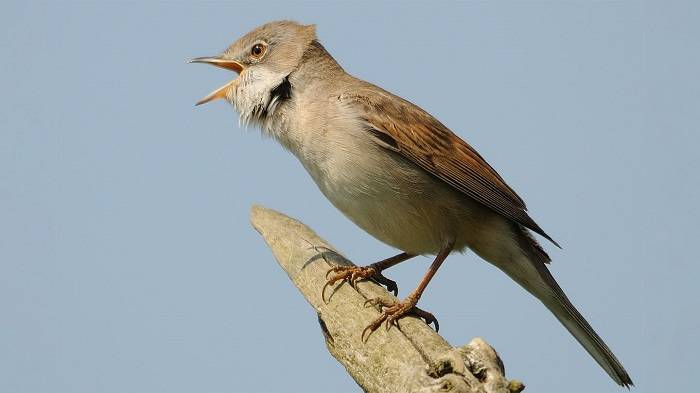
The Whitethroat is a medium-sized songbird with a distinctive appearance characterized by:
- Grayish-Brown Plumage: The upperparts of the Whitethroat are generally grayish-brown, while the underparts are pale with a slight buffy or yellowish tinge.
- White Throat Patch: As its name suggests, the Whitethroat bird features a conspicuous white throat patch that contrasts with its darker plumage, extending from the chin to the breast.
- Reddish-Brown Wings: In flight, the Whitethroat’s wings display a reddish-brown hue, with noticeable wing bars and primary feathers.
Habitat and Distribution
Whitethroats are primarily found in open habitats with dense vegetation, including:
- Hedgerows: Whitethroats are commonly found in hedgerows, where they nest and forage for insects among the dense foliage and tangled branches.
- Farmland: Agricultural areas with mixed vegetation, field margins, and hedgerows provide ideal habitat for Whitethroats, offering food and nesting sites.
- Coastal Scrubland: In coastal regions, Whitethroats may inhabit scrubby areas, dunes, and salt marshes, where they can find suitable cover and nesting sites.
Behavior

Whitethroats are energetic and agile birds with distinctive behaviors:
- Song: Male Whitethroats are known for their melodious and varied song, consisting of a series of scratchy and warbling notes, often delivered from a prominent perch within their territory.
- Foraging: Whitethroats primarily feed on insects, spiders, and other invertebrates, which they glean from foliage or catch in mid-air during aerial pursuits.
- Nesting: Whitethroats construct cup-shaped nests made of grasses, leaves, and stems, usually placed in low vegetation or hedgerows. The female incubates the eggs while the male defends the territory and helps with feeding the young.
Conservation Status
While Whitethroat populations are currently stable, they face threats from habitat loss, agricultural intensification, and changes in land management practices. Conservation efforts aimed at preserving and restoring hedgerows, farmland habitats, and coastal scrublands are crucial for ensuring the continued survival of this charming bird species.
Related Post
Unveiling the Enigmatic Hoopoe: A Fascinating Journey into the Avian World
Discovering the Enchanting Endemic Birds of Hawaii
Unraveling the Mystery of Tawny Frogmouths: Are They Dangerous?
The Whitethroat bird, with its distinctive appearance, melodious song, and energetic behavior, is a cherished visitor of British hedgerows and farmland habitats. By understanding and appreciating the unique characteristics and habitat requirements of the Whitethroat, we can work together to ensure its continued presence and conservation for future generations to enjoy. So, keep an ear out for the cheerful song of the Whitethroat and take delight in the beauty and diversity of nature’s avian inhabitants.
