

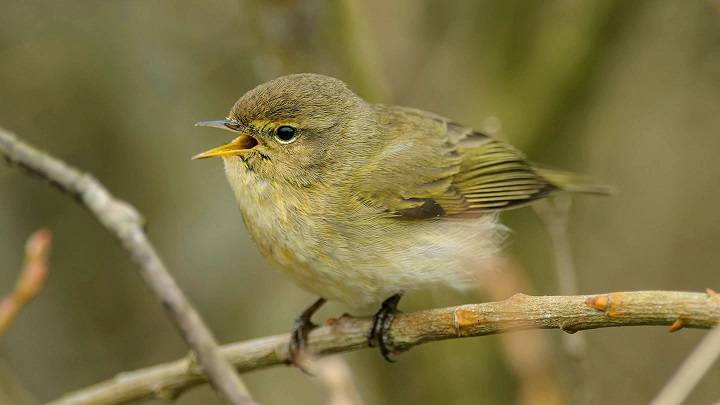
In the tapestry of British avifauna, the Chiffchaff stands out as a small yet significant thread. With its unassuming appearance and distinctive call, this diminutive bird holds a special place in the hearts of birdwatchers and nature enthusiasts across the UK. Join us as we embark on a journey to discover the fascinating world of the Chiffchaff, exploring its habits, habitat, and unique role in the British countryside.
The Chiffchaff

The Chiffchaff (Phylloscopus collybita) is a small insectivorous bird belonging to the family Phylloscopidae. Measuring around 10–11 centimeters in length, it sports olive-green upperparts, pale underparts, and a prominent eye-ring. While its plumage may appear modest at first glance, the Chiffchaff’s distinctive call—a repetitive “chiff-chaff” song—is a hallmark of springtime in the British Isles.
Habitat and Distribution
During the breeding season, Chiffchaffs are commonly found in a variety of habitats, including woodlands, parks, gardens, and scrubland. They are particularly partial to areas with dense vegetation and ample insect prey, making them frequent visitors to suburban green spaces and urban parks. In the UK, Chiffchaffs are widespread throughout England, Wales, and Scotland, with fewer numbers recorded in Northern Ireland.
Migration Patterns
Many Chiffchaffs are migratory birds, traveling thousands of miles each year between their breeding grounds in the UK and their wintering grounds in southern Europe and North Africa. The arrival of Chiffchaffs in spring is often seen as a harbinger of warmer weather, signaling the start of the breeding season for many bird species. Conversely, their departure in autumn marks the onset of the colder months ahead.
Feeding Behavior

As insectivores, Chiffchaffs primarily feed on a diet of small invertebrates, including insects, spiders, and larvae. They forage actively among foliage and along branches, employing a combination of quick hops and fluttering flights to capture their prey. During the breeding season, Chiffchaffs may also supplement their diet with berries and other plant matter to provide essential nutrients for egg-laying and chick-rearing.
Breeding Biology
Chiffchaffs typically breed between April and July, constructing cup-shaped nests from grass, leaves, and moss in dense vegetation near the ground. The female lays a clutch of 5–7 eggs, which she incubates for around 13–14 days before hatching. Both parents take turns feeding and caring for the chicks, which fledge after approximately 12–14 days. Despite their small size, Chiffchaffs are fiercely protective parents, defending their nest and young from potential predators with loud alarm calls and aggressive behavior.
Chiffchaff Small Brown Bird Uk
While Chiffchaff populations in the UK are currently stable, the species faces several threats, including habitat loss, climate change, and predation by introduced species such as cats and grey squirrels. Conservation efforts aimed at preserving and restoring suitable habitat are crucial for ensuring the long-term survival of Chiffchaffs and other woodland birds in the UK. Additionally, citizen science initiatives, such as birdwatching surveys and habitat monitoring programs, play a vital role in gathering data on Chiffchaff populations and informing conservation strategies.
Related Post:
Unveiling the Mysterious Egg-Laying Habits of Ducks
Exploring the Essential Role of Duck Grit in Avian Health
Unlocking the Mysteries of Duck Egg Laying: How Often Do Ducks Lay Eggs?
In the intricate tapestry of British birdlife, the Chiffchaff shines as a small yet significant thread, weaving its way through woodlands, parks, and gardens across the UK. With its unassuming appearance, distinctive call, and important ecological role as an insectivorous predator, the Chiffchaff exemplifies the beauty and resilience of nature in the British countryside. As we continue to cherish and protect our natural heritage, let us not forget the charm and significance of this delightful little bird, whose presence brightens our lives and connects us to the wonders of the natural world.
