

We perspire. Dogs pant. Horses drool after a run. But stand on a hot summer afternoon and watch a bird, and you may wonder: do birds sweat?
The short answer is no. Birds do not have sweat glands. They do not have a body type that is adapted to sweating. They have other methods of cooling down—methods that have been developed through millions of years of evolution.
This book explores the whole truth about bird cooling. We will learn why birds don’t sweat, how birds cool themselves, what behavior you can look out for, how different species adapt, and what it means in today’s changing climate. We’ll also look at myths, cultural attitudes, and handy tips for bird watchers and pet keepers.
By the end, you’ll know not only the answer to “do birds sweat” but also the deeper story of resilience behind it.
Do Birds Sweat? The Scientific Answer

Birds lack sweat glands. Their feathers, skin, and metabolism are not compatible with sweating.
Sweating works for mammals because bare skin releases moisture that evaporates, carrying heat away. Birds, however, are covered in feathers. If they sweated:
- Their feathers would become heavy and clumped.
- It would be harder to fly.
- They would get dehydrated extremely fast.
So in place of sweat, birds evolved several methods of cooling that involve feathers, instead of combating them.
Bird Physiology and Temperature Control
High Body Temperature
The body temperature of birds is 104°F to 107°F (40–42°C). That’s higher than ours. This means that they must be proficient at both heat generation in cold weather and heat dissipation in hot weather.
No Sweat Glands
Birds never possessed sweat glands. Their survival strategies depend on:
- Motion of air by respiration.
- Baring of skin.
- Behavioral adaptations.
Circulatory Adaptations
Birds control temperature by their circulatory system. Warm blood can be circulated to bare parts like legs, bills, and combs to lose heat. Penguins and toucans are famous for using bills as “radiators.”
How Birds Cool Themselves
Panting
Panting is a second major method. Birds flare their bills, pant rapidly, and let moisture evaporate from the throat.
Gular Fluttering
A less energetically costly method used by doves, herons, and cormorants. The throat membranes flutter rapidly, moving air across moist surfaces and cooling the bird without depletable muscle.
Wing Venting
On hot days, pigeons or crows will raise wings slightly above their body. This keeps bare skin underneath protected and heat is able to escape.
Bathing in Water
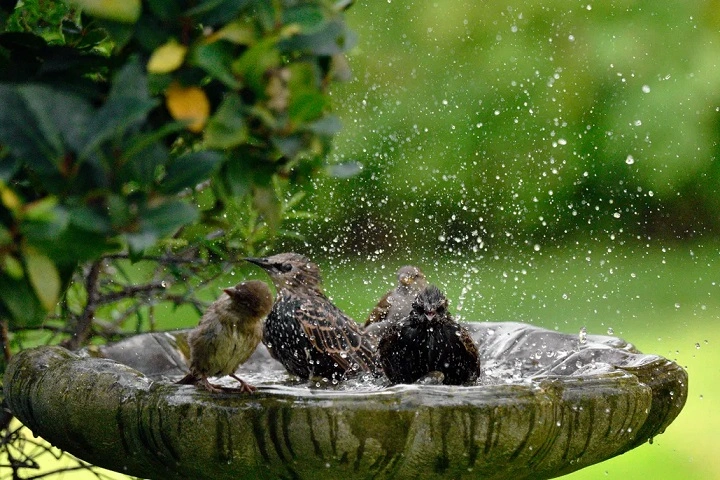
Birds bathe in ponds, streams, or birdbaths in water. Wet feathers permit heat loss from evaporation. After bathing, birds preen to restore feather position to normal.
Dust Bathing
In hot deserts, birds will roll on dust. The dust absorbs oils and keeps the feathers healthy and prevents overheating.
Shade Seeking
At full heat, most birds rest under shades. Activity slows, conserving water and energy.
Sunning
Paradoxically, some birds expose wings to sunlight. They employ it to manage feather parasites and sometimes warm up in advance early in the day. They then resort to cooling methods.
Bird Cooling Examples by Species
Pigeons
Pant, spread wings, and splash in urban fountains.
Herons
Use gular fluttering, which is recognizable as fast vibration of the throat.
Owls
Pant heavily with slightly outspread wings.
Ducks and Geese
Bathe and remain in water to cool.
Chickens
Normally seen panting and spreading wings in hot barns.
Roadrunners
Avoid midday heat, active only in cooler hours.
Penguins
Employ flippers, bills, and huddling behaviors to resist heat.
Seasonal Patterns in Bird Cooling
Summer
Panting, bathing, wing venting peak. Birds limit activity to morning and evening.
Autumn
Feather molting creates a thinner cover to reduce overheating.
Winter
Feathers ruff out to retain heat. Cooling behavior is rare.
Spring
Courtship displays increase activity levels, but moderate weather reduces heat stress.
Why Sweating Would Be Dangerous for Birds
Sweating could be dangerous for birds:
- Flight problems: Damp feathers reduce lift.
- Predator threats: Birds wet with sweat would take longer to escape.
- Loss of water: In dry or desert climates, sweating would kill birds quickly.
Evolution equipped birds to use safer, more feather-friendly approaches.
Comparisons: Birds and Other Creatures
- Humans: Sweat glands release moisture across skin.
- Dogs: Pant with open mouths and tongues.
- Reptiles: Burrow or bask; no sweat.
- Birds: Pant, flap throats, fluff skin, bathe.
Birds are more reptilian in strategy but add specialized feather cooling.
Bird Cooling in Different Climates
Desert Birds
Take advantage of shade, nocturnal behavior, and efficient water retention. Examples: roadrunners, doves.
Tropical Birds
Kingfishers, parrots, and toucans use water resources, bathing, and large bills for heat radiation.
Cold Climate Birds
Puffins and penguins balance insulation against venting. Heat is lost through flippers, bills, or panting.
Urban Birds
Starlings and pigeons use fountains, building shade, and man-made birdbaths.
Behavior Beyond Cooling: Dust and Water Baths
Baths extend beyond heat. Dust and water baths keep feathers clean and efficient. Waterproofing after baths insures essential flight and insulation.
Cultural Symbolism of “Birds Sweating”
In folk wisdom, there are no expressions such as “sweating like a bird” since birds don’t sweat. However, cultures observe panting or quiet immobility as indicators of endurance. In Native American mythology, birds surviving the heat represented survival and tolerance.
Birdwatcher’s View: Observing Cooling Activities
- Panting: Partly open beaks, quick movement of the throat.
- Wing venting: Wings slightly raised above body.
- Bathing: Repeated splashing in the heat.
- Stillness: Birds resting silently in the shade at noon.
Acquiring these signs serves bird observers in their understanding of stress levels among free-living populations.
Pet Birds and Poultry in Heat
Pet Birds
- Provide shallow baths or mist sprays.
- Position cages in the shade.
- Supply fresh water constantly.
Poultry
- Vent barns.
- Provide shaded runs.
- Use cold water sources.
- Watch for heat stress signs: open beaks, lethargy, spreading wings.
Climate Change and Birds’ Cooling Future

More global warming imposes additional stress on birds. Warmer, longer summers translate to:
- More panting and energy loss.
- Increased dehydration risk.
- Changes in migration timing.
- Decreased populations of vulnerable species like seabirds.
Conservation initiatives should include planting shade trees, wetland conservation, and mitigating the impact of climate change.
Table: Cooling Methods vs Sweating
| Cooling Method | Example Birds | Efficiency | Why Better Than Sweating |
| Panting | Owls, pigeons | High | Uses airflow, no wet feathers |
| Gular fluttering | Herons, doves | Very high | Effective, lower muscle usage |
| Wing venting | Crows, pigeons | Moderate | Easy, safe |
| Bathing | Ducks, robins | High | Uses water safely |
| Shade seeking | Most birds | Moderate | Conserves energy |
Fun Facts About Bird Cooling
Herons can flutter their throats as fast as 200 times per second.
Roadrunners lose their body heat at night to avoid wasting energy.
Chickens will pant heavily on hot summer afternoons, a common farm scene.
Penguins occasionally overheat in zoos and must be cooled artificially.
Birds’ elevated body temperature makes them more suited to short heat flashes than humans.
FAQs Regarding Do Birds Sweat
Do birds sweat at all?
No. Birds do not have sweat glands.
How do birds stay cool if they don’t sweat?
They pant, flutter throats, bathe, lift wings, and seek shade.
Can pet birds overheat?
Yes. Owners need to provide baths, shade, and ventilation.
Why don’t birds sweat like mammals?
Feathers would clump, flight would be harder, and risk of dehydration high.
Which birds are best at cooling themselves?
Heron, dove, and desert-dwelling roadrunners show good cooling methods.
So do birds sweat? No. But this is not a weakness. Birds evolved more intelligent, feather-suited cooling techniques. Panting, fluttering of the throat, bathing, wing venting, and finding shade keep them in equilibrium even in extreme climates.
Birds teach us that life is adaptation. When the climate is changed, their resilience will be tested. Our test is to know, conserve, and sustain conditions where birds can still live.
The next time you catch a bird huffing and puffing on a sweltering summer afternoon, remember: you are seeing evolution’s response to the question—do birds sweat?
