

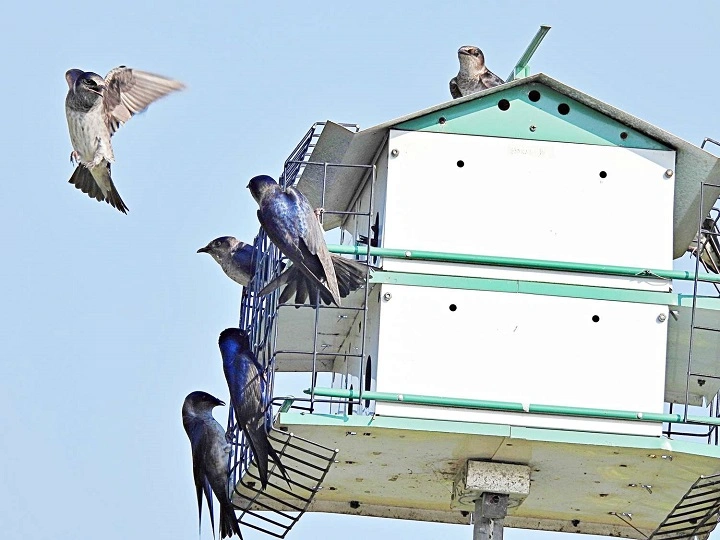
Bird lovers across North America have long admired the purple martin, a graceful and sociable swallow known for its acrobatic flight and insect-hunting skills. To support these beautiful birds, many homeowners install a martin house, a special type of birdhouse designed to attract and shelter colonies of purple martins.
If you’ve ever seen a tall, multi-level birdhouse perched on a pole in someone’s backyard, chances are it’s a martin house. But what makes these structures so unique, and how can you set one up properly to invite these birds into your space?
Let’s explore what a martin house is, why it matters, and how you can turn your yard into a sanctuary for one of the most loved songbirds in North America.
What Is a Martin House?
A martin house is a multi-compartment birdhouse specifically designed for purple martins. These houses often resemble miniature apartments, with multiple entry holes and separate nesting chambers.
Unlike many birds that prefer solitude, purple martins are communal nesters. They love living in colonies, so a large birdhouse with several rooms stacked in tiers is ideal.
Martin houses are usually:
- Mounted on poles 12 to 20 feet high
- Made from aluminum, plastic, or wood
- Painted white or light colors to reflect sunlight and stay cool
- Equipped with removable floors or compartments for cleaning
Why Purple Martins Love Martin Houses

Purple martins once nested in natural cavities like hollow trees. But over time, especially in eastern North America, they became dependent on man-made structures for nesting. In fact, in much of the eastern U.S., they nest almost exclusively in human-provided housing.
Reasons why they love martin houses:
- Elevated sites provide safety from ground predators
- Open surroundings allow easy access for aerial foraging
- Humans help deter competition from invasive species like house sparrows or starlings
Benefits of Attracting Purple Martins
Hosting a colony of purple martins isn’t just rewarding for the birds—it benefits you too.
- Natural pest control – Martins eat hundreds of flying insects each day, including beetles, flies, and wasps.
- Fascinating behavior – Their flight patterns, group dynamics, and social calls are a joy to observe.
- Conservation support – With fewer natural cavities available, providing housing supports healthy martin populations.
- Birdwatching delight – Purple martins return to the same colony year after year, giving you familiar visitors every spring.
Choosing the Right Martin House
When selecting a martin house, consider these features:
Number of Compartments
Aim for a house with at least 8 to 12 compartments. Some houses have 24 or more, but it’s okay to start small and expand later.
Compartment Size
Each nesting chamber should be about 6 x 6 x 6 inches, though some experts recommend deeper units (up to 11 inches) for increased protection.
Material
Aluminum is durable and resists weather, while wood has a more natural look but may need more maintenance. Avoid thin plastic or flimsy designs.
Color
Always choose a white or light-colored house. It reflects sunlight and keeps the inside temperature cooler for the nestlings.
Pole System
Use a telescoping or pulley-based pole for easy lowering and cleaning access. Stability is key—choose a sturdy pole and secure it in concrete if needed.
Where to Install a Martin House
Purple martins are picky about their housing location. Here’s how to set up your martin house for success:
- Height: Mount the house 12 to 20 feet above ground.
- Open space: Install in an area with at least 40 to 60 feet of open space on all sides.
- Avoid tall trees nearby: Trees too close can attract predators or block the birds’ flight paths.
- Distance from human activity: Martins are tolerant of people but prefer quiet surroundings, especially during breeding season.
- Face entry holes east or southeast: This orientation helps keep the house warmer in the early morning sun.
Maintaining a Martin House
Regular care ensures the safety and success of your martin colony.
- Clean out old nests after each breeding season.
- Check for parasites or wasp nests inside compartments.
- Monitor for intruders like house sparrows or European starlings and remove their nests if needed.
- Lower the house regularly during the nesting season to inspect and ensure healthy growth of chicks.
Purple martins are generally gone by late summer, giving you time to clean and prepare the house for next spring.
When Do Purple Martins Arrive?
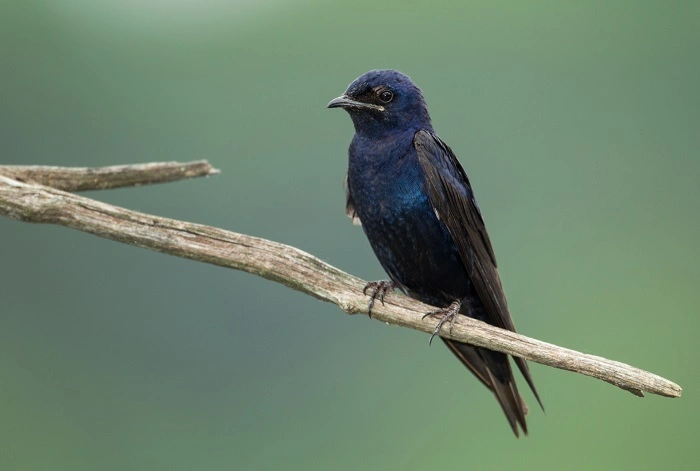
In the U.S., purple martins begin arriving in the south (Florida and Texas) as early as January or February, and further north by April or May.
Older, experienced birds arrive first to claim the best houses. If you’re installing a martin house for the first time, you may attract younger birds known as subadults later in the season.
Set up your martin house 4 to 6 weeks before your local arrival time to increase your chances of hosting a colony.
Common Problems and How to Solve Them
Problem: No martins are visiting
Solution: Make sure the house is in a wide-open area, clean, and predator-free. Try playing purple martin songs in early morning to attract scouts.
Problem: Starlings or sparrows take over
Solution: Use starling-resistant entry holes and regularly monitor for invasive nests.
Problem: Predators are bothering the nest
Solution: Use pole guards to deter snakes and raccoons. Avoid placing houses near trees or fences.
Problem: Overheating in summer
Solution: Ensure proper ventilation and always use light-colored materials to reflect sunlight.
FAQs
What is a martin house used for?
It provides safe nesting sites for purple martins, who live in colonies and return to the same housing each year.
Do purple martins return to the same house every year?
Yes. Adult martins often return to previous nesting sites, so once established, your house could host generations of birds.
Can other birds use a martin house?
Unfortunately, yes. House sparrows and starlings may try to occupy the house. Regular monitoring helps prevent this.
How many compartments should a martin house have?
A good martin house has at least 8 to 12 compartments. Larger colonies may require 24 or more.
Do I need to clean the martin house every year?
Yes. Cleaning after each breeding season helps prevent parasites and disease.
