

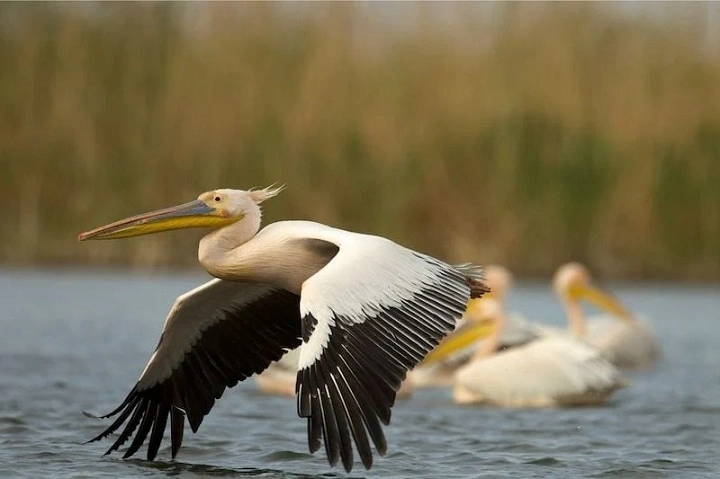
When someone mentions a bird with big mouth, your first thought might be of a cartoonish creature with a comically wide beak. But in the natural world, many real birds actually possess oversized mouths—and not just for show. These wide-mouthed birds have evolved their striking features for survival, whether it’s catching insects mid-air, storing food, or creating haunting sounds in the dark. In this article, we’ll explore the most fascinating birds with big mouths, their behavior, diet, and the evolutionary reasons behind their unusual appearance.
What Defines a Bird With a Big Mouth?
More Than Just Size
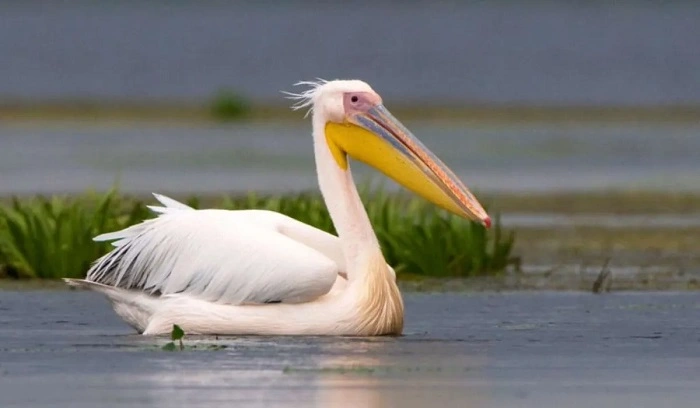
The term “bird with big mouth” usually refers to birds with unusually large beaks, gapes (mouth openings), or wide jaws in proportion to their head. These adaptations often serve specific purposes:
- Catching flying insects
- Enhancing vocal projection
- Attracting mates
- Digestive storage or food processing
Common Traits
Birds with large mouths typically share these traits:
- Nocturnal or crepuscular activity
- Silent flight or camouflage
- Gaping mouths for ambush feeding
- Enlarged jaw hinges for rapid opening and closing
Famous Birds With Big Mouths
The Tawny Frogmouth
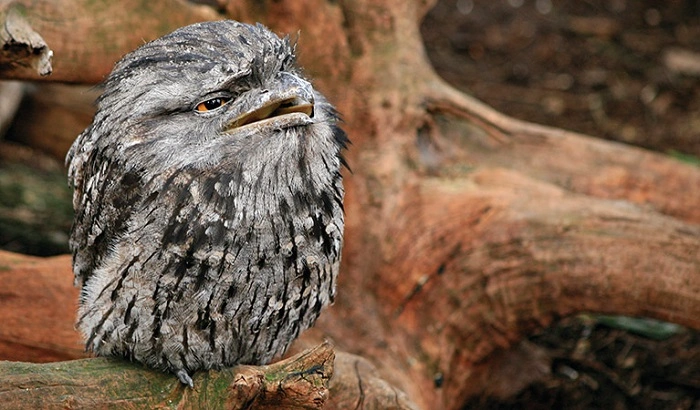
Native to Australia, the tawny frogmouth is often mistaken for an owl, but it’s actually part of the nightjar family. Its huge, wide mouth opens like a funnel, perfect for catching insects on the fly.
- Appearance: Camouflaged feathers, wide flat beak
- Diet: Moths, beetles, spiders, and other nocturnal insects
- Behavior: Nocturnal, uses stillness and silence to hunt
The Pelican
One of the most iconic birds with big mouths, pelicans have an enormous bill and a flexible throat pouch used to scoop fish from water. The Australian pelican holds the record for the largest bill of any bird.
- Appearance: Long beak with expandable gular pouch
- Diet: Primarily fish
- Behavior: Group feeding, diving, and cooperative hunting
The Potoo
This haunting bird from Central and South America has a massive mouth, perfect for snapping up flying insects during its nighttime hunts. Its wide gape allows it to eat without even needing to move much.
- Appearance: Large eyes, broad mouth, cryptic plumage
- Diet: Flying insects like moths and beetles
- Behavior: Perches motionless during the day, hunting by night
The Nightjar
Closely related to the potoo and frogmouth, nightjars have extremely wide mouths to help them catch insects while flying at night. Their small beaks conceal a surprising gape that opens to the width of their head.
- Appearance: Slim, long wings, tiny beak with wide gape
- Diet: Moths, flies, beetles
- Behavior: Silent flight, aerial insect hunting, camouflage
The Shoebill Stork
While not known for gape width, the shoebill has one of the most massive beaks in the bird kingdom. Though it doesn’t flycatch like others, its huge mouth enables it to swallow large fish, even baby crocodiles.
- Appearance: Dinosaur-like, enormous shoe-shaped bill
- Diet: Lungfish, catfish, snakes
- Behavior: Stalking prey in swamps, powerful bite force
Evolutionary Reasons for a Big Mouth in Birds
Feeding Efficiency
The primary reason birds evolve large mouths is to improve their ability to catch or swallow prey. Flycatchers, nightjars, and other aerial insectivores benefit from a large mouth that increases surface area during mid-air feeding.
Vocal Abilities
Some birds use their big mouths to produce louder, deeper, or more resonant sounds. A wide gape can act like a resonator, amplifying calls used for mating or territory defense.
Thermal Regulation
In a few species, especially those in hot climates, a larger beak or mouth can help with heat dissipation—similar to how dogs pant. While not a primary function, it plays a minor thermoregulatory role.
Where to See Birds With Big Mouths
Wetlands and Coastal Regions
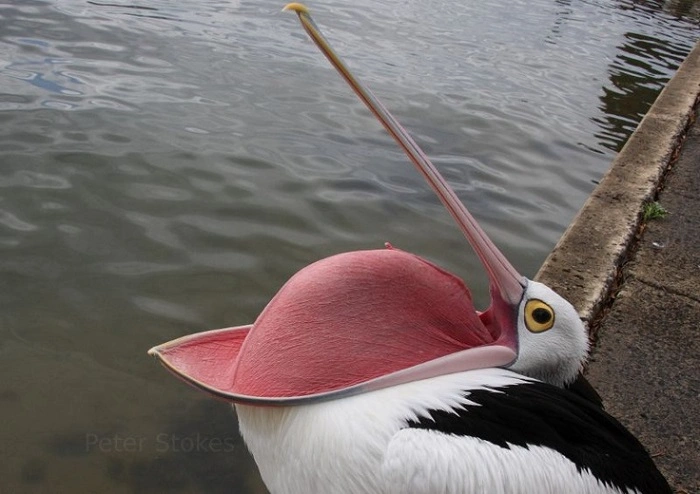
Pelicans are easy to spot near lakes, estuaries, and coastal waters where fish are abundant. Their group hunting techniques are spectacular to witness.
Forests and Jungles
Potoos, nightjars, and frogmouths inhabit dense tropical and subtropical forests. Spotting them is difficult due to their camouflage, but they’re often heard at night.
Zoos and Bird Sanctuaries
For those who don’t live near wild populations, many zoos and bird centers house species like the shoebill or pelican, giving visitors an up-close look at these wide-mouthed wonders.
How These Birds Hunt and Feed
Aerial Insect Catching
Birds like nightjars fly with their mouths wide open, scooping insects mid-air. Their large gape increases the chance of capturing prey, especially in low-light conditions.
Scoop-and-Swallow
Pelicans plunge into the water or work in groups to herd fish. They scoop dozens of small fish into their pouch and drain the water before swallowing.
Sit-and-Wait Strategy
Potoos and frogmouths remain absolutely still, blending into their environment until prey comes near. Their mouths snap open in a flash, trapping insects effortlessly.
The Odd Beauty of Birds With Big Mouths
Unconventional Charm
While not considered traditionally “pretty,” birds with big mouths are fascinating and often endearing. Their features are perfect examples of how evolution shapes form to function.
Popular in Pop Culture
The shoebill and potoo have become internet sensations for their “weird” looks and quirky behavior. Memes and viral videos have brought attention to these often-overlooked species.
Vital to Ecosystems
Despite their odd appearance, these birds play important roles. Many control insect populations, clean up water bodies, or even act as keystone species in their environments.
FAQs About Birds With Big Mouths
What bird has the biggest mouth?
The pelican has the largest mouth and beak size overall, especially with its throat pouch expanded.
Are birds with big mouths dangerous?
Most are harmless to humans. Some, like the shoebill, can appear intimidating but are typically shy and solitary.
Do birds with big mouths sing louder?
Not necessarily louder, but some use their large mouths to project sound more efficiently during mating calls.
Where can I see a potoo or frogmouth?
Potoos live in Central and South America, while frogmouths are found in Australia and Southeast Asia. They are best observed at night with guidance.
Can birds open their mouths as wide as snakes?
Some birds like nightjars and pelicans have extremely wide gapes, but not to the extent of snakes. Their flexibility is adapted for their prey size and feeding style.
The next time you hear someone mention a bird with big mouth, think beyond the strange looks. These birds are marvels of evolution, combining odd appearances with specialized skills that help them thrive in challenging habitats. From the ghostly potoo to the majestic pelican, they remind us that in nature, function is more important than fashion—and sometimes, weird is wonderful.
