

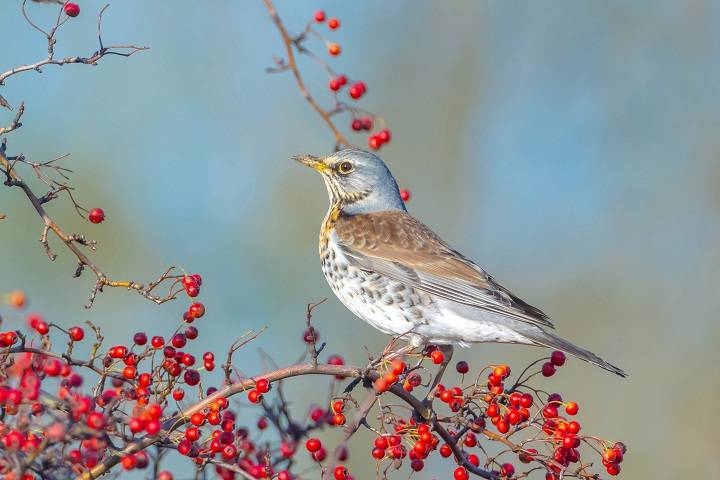
As winter descends upon the British countryside, a familiar sight graces the frost-kissed fields and hedgerows—the arrival of the Fieldfare. With their striking plumage and gregarious behavior, these thrush-like birds herald the onset of the colder months and bring a touch of wild beauty to our landscapes. Join us as we delve into the world of the Fieldfare, uncovering its habits, habitat, and the vital role it plays in the UK’s winter ecology.
An Introduction to the Fieldfare
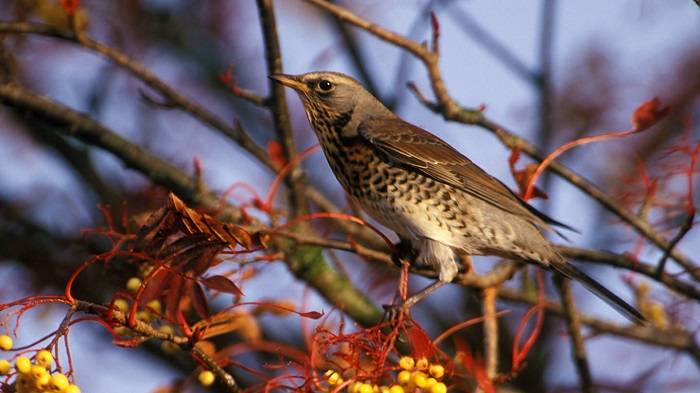
The Fieldfare (Turdus pilaris) is a member of the thrush family, Turdidae, and is renowned for its distinctive appearance and lively demeanor. Sporting a slate-grey back, chestnut-brown wings, and a speckled breast, the Fieldfare cuts a striking figure against the winter landscape. These medium-sized birds are known for their noisy flocks and can often be spotted foraging in fields, orchards, and hedgerows across the UK.
Habitat and Distribution
Fieldfares are predominantly migratory birds, breeding in northern Europe and Scandinavia during the summer months before embarking on their winter migration to the UK and other parts of western Europe. Upon their arrival in the UK, Fieldfares can be found in a variety of habitats, including farmland, parkland, and suburban gardens. They are particularly fond of open fields and pastures where they can feed on earthworms, insects, and berries.
Migration Patterns
The arrival of Fieldfares in the UK typically occurs between October and November, coinciding with the onset of colder weather and diminishing food supplies in their breeding grounds. These winter visitors form large, noisy flocks, often mingling with other thrush species such as Redwings and Song Thrushes as they scour the countryside for food. Fieldfares are highly adaptable birds and can be found in a wide range of habitats during their winter sojourn in the UK.
Feeding Behavior
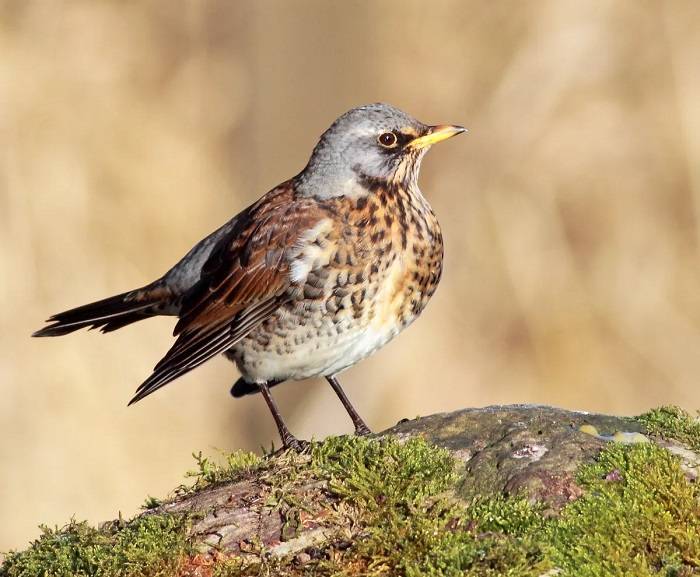
Fieldfares are omnivorous birds with a diverse diet that includes earthworms, insects, berries, and fruits. They are particularly fond of rowan berries, hawthorn berries, and other small fruits, which they consume in large quantities during the winter months. Fieldfares are known for their distinctive feeding behavior, often descending upon hedgerows and berry-laden trees in noisy flocks, where they compete vigorously for food.
Breeding Biology
During the breeding season, Fieldfares return to their northern breeding grounds in Scandinavia and northern Europe, where they construct cup-shaped nests from grass, twigs, and mud. The female lays a clutch of 4–6 eggs, which she incubates for around 10–14 days before hatching. Both parents take turns feeding and caring for the chicks, which fledge after approximately 10–14 days. Fieldfares are highly territorial birds and will vigorously defend their nesting territory from intruders.
Fieldfare Uk
Fieldfares are classified as migratory birds of least concern by the International Union for Conservation of Nature (IUCN), with stable populations across their range. However, like many migratory species, Fieldfares face threats such as habitat loss, climate change, and agricultural intensification. Conservation efforts aimed at preserving and restoring suitable habitats for wintering and breeding Fieldfares are crucial for ensuring the long-term survival of these charismatic birds in the UK and beyond.
Related Post:
When Do Ducks Start Quacking? Unraveling the Quack-tastic Mystery
Exploring the Enigmatic Ancona Duck: A Quirky, Beautiful, and Versatile Breed
Exploring the Fascinating World of Male, Female, and Male Muscovy Ducks
In the midst of winter’s chill, the arrival of the Fieldfare brings a sense of vitality and wild beauty to the British countryside. With their striking plumage, lively demeanor, and vital ecological role as seed dispersers and insect predators, Fieldfares enrich our landscapes and remind us of the interconnectedness of all living things. As we continue to cherish and protect our natural heritage, let us not forget the charm and significance of these delightful winter visitors, whose presence brightens our lives and connects us to the wonders of the natural world.
