


Picture a breathtaking natural spectacle: thousands of birds moving as one, swirling and swooping through the sky in perfect harmony. This mesmerizing phenomenon, known as a murmuration, is a captivating display of collective behavior exhibited by starlings. These small, iridescent birds are renowned for their remarkable ability to form intricate patterns and shapes in the sky, leaving onlookers spellbound by their synchronized movements. In this comprehensive guide, we delve into the fascinating world of starling murmurations, exploring the reasons behind these awe-inspiring displays and the scientific mysteries that continue to intrigue researchers and bird enthusiasts alike.
The Beauty of Starling Murmurations
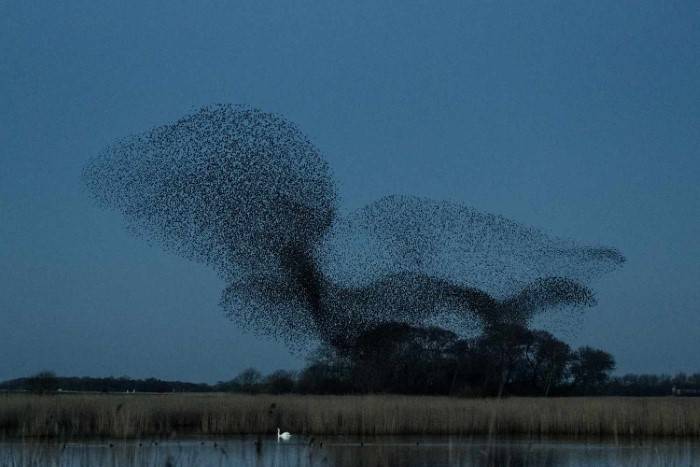
Aerial Ballet:
Murmurations are like nature’s ballet, with thousands of starlings performing intricate maneuvers in the sky with astonishing precision and coordination. The fluidity and grace of their movements create a mesmerizing spectacle that captivates observers and inspires wonder.
Dynamic Patterns:
One of the most remarkable aspects of murmurations is the ever-changing patterns and shapes formed by the flock as it moves through the air. From undulating waves to twisting spirals and intricate vortexes, each murmuration is a unique and dynamic work of art.
The Science Behind Starling Swarms
Safety in Numbers:
The primary function of murmurations is believed to be safety in numbers, as starlings gather together in large flocks to confuse and deter predators such as birds of prey. The dense, swirling mass of birds makes it difficult for predators to single out individual targets, providing a collective defense mechanism for the flock.
Information Exchange:
Murmurations also serve as a means of information exchange among flock members, allowing starlings to communicate and share vital information about food sources, roosting sites, and potential threats. Through subtle changes in flight direction and speed, individual birds convey messages to the rest of the flock, facilitating coordinated movement and decision-making.
The Role of Individual Behavior

Local Interactions:
Despite the apparent complexity of murmurations, scientists have found that individual starlings follow simple rules based on their interactions with nearby neighbors. By adhering to these rules, such as maintaining a minimum separation distance and aligning their flight direction with neighboring birds, individual starlings collectively give rise to the emergent patterns observed in murmurations.
Adaptive Behavior:
Starlings exhibit adaptive behavior within murmurations, adjusting their movements in real-time based on environmental cues, social interactions, and perceived threats. This dynamic interplay between individual behavior and collective dynamics allows murmurations to adapt and respond to changing conditions in their environment.
Mysteries and Unanswered Questions
Leadership and Coordination:
Despite decades of research, the mechanisms underlying the coordination and leadership within murmurations remain poorly understood. Scientists are still puzzled by how individual starlings synchronize their movements with such precision and whether certain individuals play leadership roles within the flock.
Environmental Influences:
The influence of environmental factors such as wind patterns, landscape features, and temperature gradients on murmuration behavior is another area of ongoing research. Understanding how these factors shape the dynamics of murmurations could provide valuable insights into the adaptive significance of collective behavior in starlings.
Why Do Starling Swarms
Conservation and Cultural Significance
Ecological Importance:
Murmurations are not only a sight to behold but also play a crucial ecological role in the ecosystems where starlings inhabit. By controlling insect populations, dispersing seeds, and aerating soils, starlings contribute to the health and balance of their ecosystems, making them an integral part of the natural world.
Cultural Symbolism:
Across cultures and civilizations, starlings and murmurations have inspired awe, wonder, and reverence. From ancient myths and folklore to modern-day art and literature, these birds have left an indelible mark on human culture, serving as symbols of freedom, unity, and the beauty of the natural world.
Related Post:
Cracking the Cayuga Duck Egg Mystery: Unveiling the Secrets of Cayuga Duck Eggs
Exploring Duck-Chicken Compatibility: Can They Coexist?
Unraveling the Complex World of Aggressive Male Duck Behavior
The phenomenon of starling murmurations represents a mesmerizing convergence of art and science, beauty and complexity. As thousands of birds come together in perfect harmony, they create a symphony of movement that transcends individuality and reminds us of the interconnectedness of all living beings. While the secrets of murmurations continue to elude us, their beauty and significance serve as a testament to the wonders of the natural world and the boundless mysteries that await discovery. Whether witnessed firsthand or experienced through the lens of science, murmurations remind us of the profound magic that exists all around us, waiting to be explored and understood.
